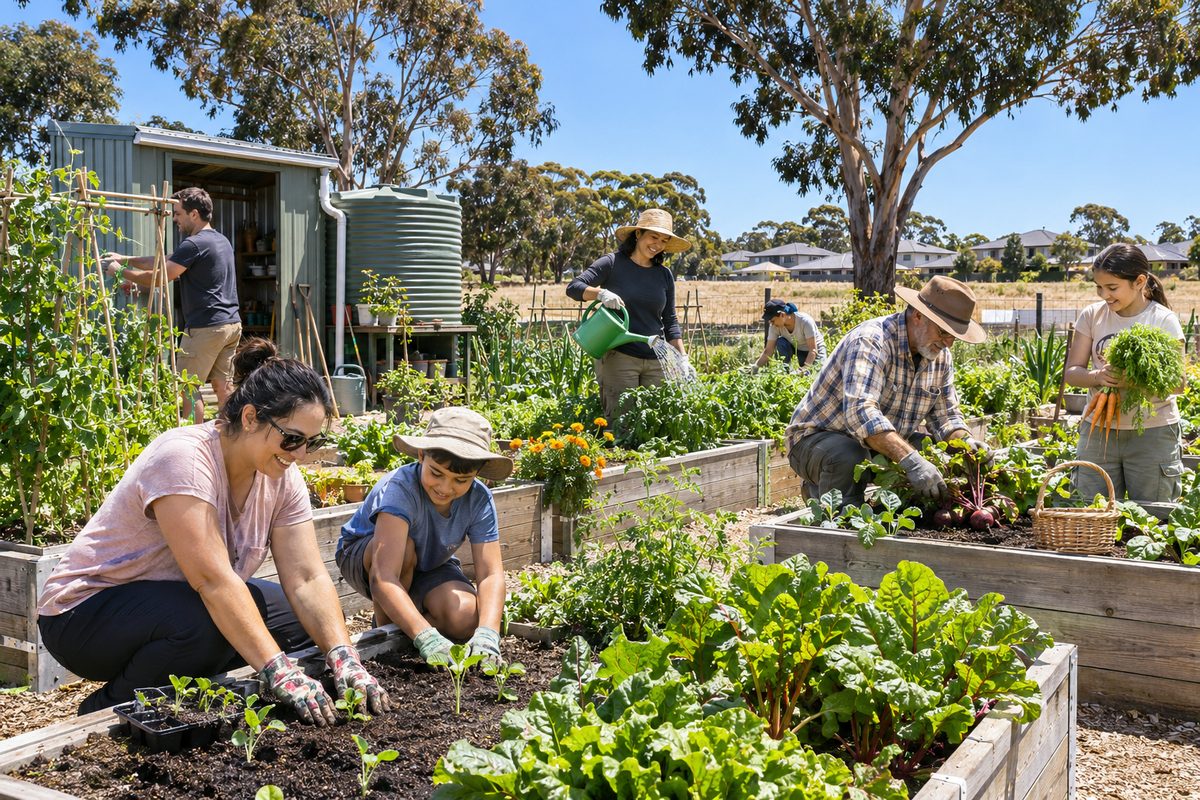
Point Cook Community Gardens
Point Cook community gardens give residents shared places to grow food, learn practical skills and meet people close to home. Access, plot rules and opening times can change, so residents should confirm current details with Wyndham City Council or the group managing each garden before visiting. Where a public plot is unavailable, a school, neighbourhood house, owners corporation or informal street group may offer another path into local growing.
Community gardening suits Point Cook because many homes have small yards, paved outdoor areas or rental limits. A shared garden can provide growing space without asking each household to buy tools, build beds or manage a full garden alone. It also turns gardening into a local activity shaped by shared care.
What does a community garden offer local residents?
A community garden is land managed by a group for growing plants and sharing skills. Some gardens divide the site into individual plots. Others use shared beds, where members plan, plant and harvest together. A site may combine both systems.
The main value comes from access. A resident can learn how soil, watering and seasonal planting work before spending money at home. Children can see where food comes from. Older residents can keep active at a pace that suits them. New residents can meet neighbours through a task that gives people an easy reason to talk.
This form of Outdoor recreation differs from a walk or team sport. The activity leaves a useful result, such as herbs, seedlings, compost or a healthier garden bed. It can be gentle work, but digging, lifting and long periods in the sun still require care.
Community gardening is also a small form of Urban agriculture. It brings food production into a built-up suburb, often on land that would otherwise serve only one purpose. The harvest will not replace supermarkets or the wider Food industry. It can still help residents understand growing seasons, food waste and the work behind fresh produce.
How do shared plots usually work?
Each garden sets its own system. A plot-based garden may assign a raised bed to one household for a set period. Members often pay a small fee, attend working bees and follow rules on water, chemicals, weeds and tool storage. A communal garden asks members to care for shared areas and agree on how produce is divided.
Communal work keeps the whole site usable. It may include turning compost, clearing paths, repairing beds or filling mulch. This work matters even when it does not improve a member’s own plot. A garden fails when people harvest from shared beds but leave maintenance to a few regular volunteers.
Before joining, ask for the written rules. Check whether membership includes a personal bed, shared produce or access to workshops. Find out whether children need direct supervision and whether members can enter outside organised sessions. Ask how long the waiting list is and what happens when a plot is left untended.
A clear system protects members from common disputes. For example, a hypothetical gardener may assume that ripe tomatoes in a shared area are free to pick. The group may instead reserve that crop for a community meal. Labels and harvest rules prevent that mistake.
What can grow well in Point Cook conditions?
Point Cook gardeners need to plan for exposed sites, drying winds and soil that may vary across a developed suburb. The conditions inside one community garden can differ from those in a nearby yard. Raised beds, imported growing mix, shade from buildings and daily sun hours all affect the result.
Fast crops give beginners useful feedback. Lettuce, silverbeet, radish and many common herbs can fit into small beds. Tomatoes, beans and zucchini need more room and regular care. Winter crops may include peas, broad beans and leafy greens. Planting dates should follow the local season rather than a seed packet written for another climate.
An Ornamental plant can earn space in a productive garden when it supports the site’s purpose. Flowers may attract insects, add colour or mark the edge of a bed. Garden rules may limit invasive plants, large shrubs or species that spread seed into neighbouring plots.
Sustainable gardening starts with matching each plant to the site. A thirsty crop in a hot, exposed bed will demand more water and may still perform poorly. Mulch, compost and suitable plant spacing can reduce stress. Dense planting is not always efficient because crowded leaves can restrict airflow and make pests harder to spot.
How does water shape a successful shared garden?
Water access can decide whether a garden remains productive through summer. Members should know who pays for water, which taps they may use and whether watering is limited to certain times. Hand watering allows close control. Drip lines can water the root zone with less loss, but they need checks for leaks and blocked outlets.
Rainwater harvesting can reduce demand on mains water when a site has a suitable roof, tank and safe collection system. A tank does not create an endless supply. Storage size, roof area and the timing of rain set the limit. Garden groups also need secure lids, stable bases and a plan for keeping gutters and filters clean.
Mulch slows surface drying and protects soil from hard rain. Compost can improve the way soil holds water, though unfinished compost may harm young plants. Watering early in the day reduces heat stress and gives leaves time to dry. Gardeners should direct water into the soil rather than spraying paths or established weeds.
A shared watering roster needs clear ownership. If everyone assumes another member will water during a hot week, seedlings can die within days. A simple dated record near the tool shed can show what was watered and what still needs attention.
Can a garden improve access to fresh food?
A shared garden can support Food security on a small local scale. It gives members access to some fresh produce and the skills to grow more. It may also help households share surplus herbs, greens or seedlings. It cannot solve high food prices or replace reliable access to shops, transport and income.
That limit is often missed. A small plot may produce a useful seasonal harvest, but yields change with weather, pests, member time and water. Claims that a garden will feed every participating household set the wrong goal. Its stronger role is to build skill, reduce waste and add a modest source of Local food.
Groups can make harvests more useful by planting what members will eat. A bed full of one crop may create waste if it ripens at once. Staggered sowing spreads the harvest. Clear donation arrangements can also move surplus produce quickly, provided the receiving organisation has agreed to accept it.
Food safety still applies. Members should wash produce, keep animal waste away from growing beds and avoid using unknown chemicals. A garden beside a road, old building or former industrial use may need soil assessment before food crops are planted. Raised beds with known soil can reduce exposure when the ground history is unclear.
What does good garden membership look like?
Reliable members do small jobs before those jobs become large ones. They return tools, report damage and keep paths clear. They weed around their beds as well as inside them. They ask before harvesting anything outside their allocated area.
Environmental stewardship becomes practical in a community garden. Members see how waste, water and plant choice affect a shared place. Composting can keep suitable food scraps out of general waste. Habitat plants can support insects and birds. Chemical use can affect neighbouring beds, so one person’s choice may become a group issue.
Good groups also make participation possible for people with different physical needs. Raised beds can reduce bending. Firm paths may help people using mobility aids. Lightweight tools can make short sessions easier. These features should be checked with the garden because access standards vary between sites.
Members should expect some crop loss. Birds, insects, heat and missed watering can undo weeks of work. The useful response is to record what happened and change the next planting. Covering seedlings, changing sowing time or selecting a tougher crop often works better than reaching first for a spray.
How can you find a current garden or growing group?
Start with Wyndham City Council’s current community garden information and local community listings. Ask Point Cook neighbourhood houses, libraries and schools whether they host gardens, workshops or volunteer sessions. Local social groups may also know about small projects that do not have a strong web presence.
Confirm the address before travelling. A search result can remain online after a project moves, closes or pauses membership. Ask whether the site is open to the public or available only during supervised sessions. Check fees, waiting periods, accessibility and the level of work expected from members.
A first visit should help you judge the group rather than the size of the harvest. Look for clear bed labels, safe paths and tools stored with care. Ask how decisions are made and how new members learn the rules. A neat site can be appealing, but clear communication matters more over a full growing season.
Residents comparing other local activities can return to the Point Cook Tideline local guide. Gardening suits people who want regular contact with one place. Those seeking a casual visit with no ongoing duty may prefer another form of recreation.
What if no plot is available?
A waiting list does not have to stop you growing. Ask whether the garden accepts volunteers for shared beds, compost work or seasonal events. This gives you a chance to learn the system and meet members before a plot becomes free.
Container growing can work on a balcony, courtyard or sunny entrance. Choose pots with drainage holes and enough depth for the crop. Large containers dry more slowly than tiny pots, though they become heavy once filled. Renters should protect surfaces and confirm any property rules before installing large planters or climbing frames.
A verge, common area or unused patch of private land should never be planted without permission. Check ownership first. Owners corporations, landlords and public land managers may set rules on access, water, structures and liability. Written approval prevents a garden from being removed after residents have invested time and money.
Another option is a small neighbourhood growing group. Several households can share seeds, compost knowledge and surplus crops while keeping plants on their own properties. This model lacks a central garden, yet it can build the same exchange of skills with fewer land and access issues.
How can residents start a new community garden?
Begin with people, purpose and permission. Find residents willing to attend planning meetings and regular work sessions. Decide whether the garden will focus on food beds, education, social contact or a mix of uses. Then identify the landowner and ask what approval process applies.
The site needs enough sunlight, safe access and a workable water source. Soil history also matters. Do not assume an empty block is safe for growing food. Past dumping, construction waste or unknown fill may require testing or raised beds with known material.
Prepare a simple plan covering membership, costs, water, compost, tools, waste and conflict. Include a method for dealing with abandoned plots. Set out who holds keys, who can spend group funds and who speaks with the landowner. These details keep a friendly idea from becoming an unclear duty.
Start at a size the group can maintain. Four cared-for beds will teach more than a large site covered with weeds. Add beds after the watering roster, working bees and basic rules have proved reliable through a full season.
What should you do before committing?
Choose a garden that fits your available time, travel needs and preferred way of working. A personal plot gives more control but creates a steady duty. Shared beds spread the work, while decisions and harvests must also be shared.
Read the rules, visit during an active session and ask what members must do each month. Check water access, plot allocation, fees and current vacancies. If no established garden fits, begin with containers or volunteer in a shared area while you learn what a local project needs.
Contact the garden manager or Wyndham City Council, confirm current access and attend one working session before accepting a plot.