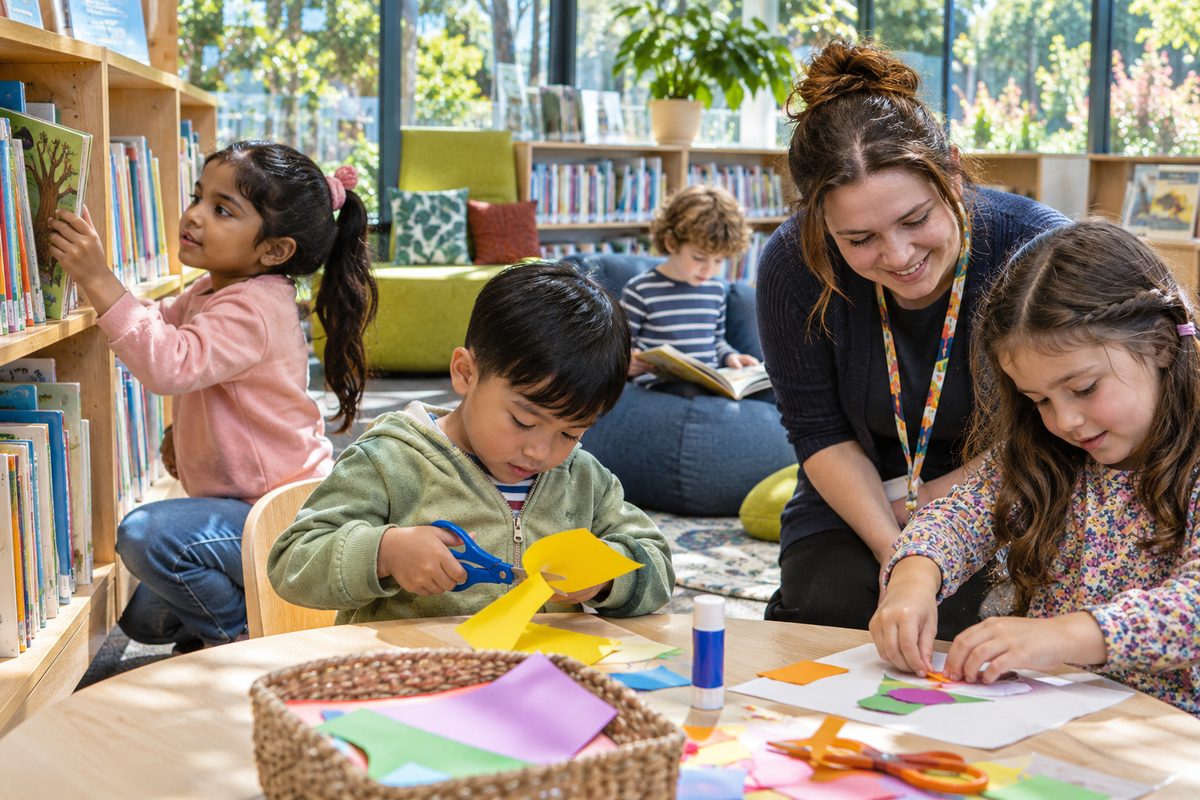
Point Cook Library Children’s Activities
Point Cook Library offers children a place to read, create, explore technology and join guided activities throughout the year. The program can include early-years sessions, after-school events and school holiday activities. Sessions, age limits and booking rules can change, so families should check the current Wyndham City Libraries calendar before leaving home.
The main value is choice. A toddler may need songs and simple stories. A school-aged child may prefer craft, coding or a practical challenge. An older child might want a quiet place to study or use digital tools. Choosing by age, interest and session format makes a library visit easier for both the child and the adult bringing them.
Which activities suit babies, toddlers and preschool children?
Early-years activities usually centre on stories, songs, rhyme and shared play. These simple sessions support Literacy before a child can read alone. A baby hears rhythm and repeated sounds. A toddler learns to connect words with objects and actions. A preschool child starts to follow a story from beginning to end.
These sessions also support Language development. Children hear new words in a clear setting, watch facial expressions and practise taking turns. Repeated songs help them remember sounds and sentence patterns. A child may stay silent during a session, then repeat a phrase at home. That delayed response is a normal part of Learning.
Families can add value without turning the visit into a lesson. Point to a picture, name one object and pause for the child to respond. Ask a simple question such as, “Where is the dog?” If the child loses interest, let them watch or move quietly. Young children often learn through short bursts of attention.
The best session is one matched to the child’s usual routine. A tired toddler may struggle even when the activity is well run. Allow time for parking, finding the children’s area and settling before the start. Bring only what is needed, since bags, snacks and loose toys can become distractions.
How do story sessions build reading skills?
A story session gives children more than access to a book. It shows how reading works. They see an adult hold a book, turn pages, follow print and use tone to show meaning. They also learn that a story has an order, with events that lead to an outcome.
Shared reading strengthens Language because children hear words they may not meet in daily talk. Picture books can introduce names for animals, places, feelings and actions. The pictures give clues, which helps children work out meaning without a long explanation.
Adults can extend the activity after the session by borrowing a book on a similar theme. Read it again at home and let the child finish a repeated line. Ask what they can see rather than testing whether they remember every detail. A relaxed exchange keeps reading enjoyable.
Children who speak another Language at home do not need to replace it with English during shared reading. Families can discuss a picture in their strongest language, then notice an English word from the book. This helps the child connect ideas across both languages.
What can primary school children do at the library?
Primary school children often want an activity with a clear task. Craft sessions, book-based events, games and building activities give them a reason to take part. The finished item matters less than the choices made during the process.
Creativity grows when children can test an idea and change it. A paper construction that falls over creates a useful question: what would make it stand? A drawing activity can lead to a new character and a short story. A group game can teach children to explain rules and listen to other players.
Some activities may require children to work beside people they have not met. That can build confidence, but adults should not force quick social contact. A child may first watch, then copy part of the task and speak when ready. Structured activities can make this easier because everyone has a shared focus.
After-school sessions can also give families a useful break between the school day and evening routines. Keep expectations realistic. A child who has spent hours following instructions may prefer browsing, drawing or quiet reading over another guided task.
How do library activities support STEM skills?
Library programs may use Science, Engineering and Mathematics through hands-on challenges. Children might sort objects, test a structure, follow a pattern or measure materials. These tasks make an abstract idea visible.
Science begins with noticing what happens. Engineering asks how something can be made or improved. Mathematics helps children compare size, count parts and recognise patterns. A single building task can draw on all of these areas without feeling like a school worksheet.
The useful moment often comes when a first attempt fails. If a model tips over, the child can change its base. If a sequence does not work, the child can find the missed step. Adults can help by asking, “What could you change?” Giving the answer too soon removes the part that builds problem-solving skill.
A hypothetical example is a bridge challenge using blocks or craft materials. One child may focus on making it long, while another builds for strength. Testing the bridge reveals which design holds more weight. The result gives both children evidence they can use on the next attempt.
What role does technology play in children’s activities?
Technology at a library can include computers, digital resources, coding tools or guided media activities. The aim should be active use. Children gain more when they create, solve or search with a purpose than when they passively watch a screen.
A coding activity can teach order and cause. A child gives an instruction, checks the result and corrects the sequence. A digital drawing task joins technical control with Creativity. Research activities teach children how to choose useful search words and compare information.
Adults should check the stated age level before booking. A tool designed for older children may require reading, keyboard or problem-solving skills that a younger child has not developed. Joining a suitable beginner session can prevent frustration and protect the child’s confidence.
Library technology does not need to replace books or physical play. These formats support different skills. A child can read instructions on screen, build an object by hand and explain the result to the group. That mix connects reading with action.
Are school holiday activities different from regular sessions?
School holiday activities often use special themes or longer projects. They may attract more families than a normal weekly session, so bookings can fill and room limits may apply. Some events may accept drop-ins, while others require registration.
Check the listing for the date, start time, age range and whether an adult must remain. Read any note about materials or clothing. A messy craft task may call for clothes that can handle paint or glue. An activity built around independent reading may suit confident readers more than younger siblings.
Do not assume every advertised children’s event runs at Point Cook Library. Wyndham City Libraries operates several branches, and one calendar may display events across the municipality. Confirm the branch name before booking and again before travelling.
If a session is full, the visit can still have a purpose. Let the child choose books, use the children’s area or set a small search task based on their interests. For example, ask them to find one book about space and another that explains how machines work. This keeps the outing tied to their curiosity.
How should families choose an activity?
Start with the child rather than the event title. Consider their age, attention span and comfort in groups. A lively song session may suit one child, while another needs a quiet table activity. Neither choice is better.
Next, check whether the session is guided, self-paced or open-ended. Guided sessions work well for children who like a clear sequence. Self-paced activities allow breaks. Open-ended tasks suit children who enjoy making their own decisions.
Match the difficulty to the child’s current skills. An activity should offer a small stretch without making every step hard. A child who needs constant adult correction may be in the wrong age group. A child who finishes at once may benefit from adding a personal challenge.
Use these checks before committing:
- Confirm that the venue is Point Cook Library.
- Read the listed age range and booking terms.
- Check whether a parent or carer must stay.
- Note the session length and accessibility information.
- Look for cancellation or waitlist updates.
Program details can change after an event first appears. The official Wyndham City Libraries listing should be the final source for schedules and entry conditions.
What should you expect during the first visit?
Arrive early enough to find the activity area without rushing. Tell the child what will happen in plain words. For example: “We will listen to a story, make something and then choose a book.” This gives them a simple sequence.
Some children join at once. Others need to stand near their adult and observe. Let staff lead the session and follow any room rules. If the child becomes upset, step outside for a short reset rather than asking them to endure the whole activity.
Noise levels vary. Story and music sessions can be busy, while reading and table activities may be calmer. Families with sensory needs should contact the library before attending to ask about the room, expected numbers and available quiet spaces. Specific access arrangements should be confirmed directly because they can differ by event.
Borrowing books after the activity can help connect the visit with home. Choose one book the child selects freely and one linked to the day’s topic. This gives them control while extending the idea they explored.
How can parents extend the learning at home?
Keep the follow-up short and practical. Ask the child to show one thing they made or explain one idea they noticed. Avoid turning the conversation into a quiz. The goal is to help them recall and use the experience.
A story activity can lead to drawing a new ending. A building task can be repeated with boxes or blocks. A Science activity can lead to watching what floats in a bowl of water, with close adult supervision. A Mathematics game can continue through counting steps, sorting toys or spotting shapes.
Use the child’s own questions as a guide. If they ask why a tower fell, test wider bases. If they want to know more about an animal from a book, find an age-suitable source together. This keeps Learning linked to a real point of interest.
Record only what helps. A photo of a finished project may be enough. There is no need to create worksheets or track every skill. Regular reading, conversation and playful testing provide more value than a complex home plan that the family cannot sustain.
Where should families check current details?
Use the official Wyndham City Libraries event calendar for live program information. Filter by branch, audience or date where those options are available. Open the full event entry rather than relying on a search preview, since the full listing may contain booking conditions or age limits.
For broader Point Cook ideas and practical local guides, visit https://thepointcooktideline.pages.dev/. Use that local context to plan the rest of the outing, but confirm library sessions through the official library source.
Save the booking confirmation if registration is required. Recheck the event on the day, especially during school holidays or periods when opening hours may change.
What is the best way to plan the next visit?
Choose one activity that fits the child’s age and current interest, confirm it on the Wyndham City Libraries calendar, then arrive early enough for the child to settle.