Point Cook to Williams Landing Station
The simplest Point Cook to Williams Landing Station trip is usually a local bus or a drive along Dunnings Road and Palmers Road, followed by a Werribee line train. The best option depends on where you start in Point Cook, when you travel and whether you need to leave a car at the station. Check the current Public Transport Victoria timetable before leaving because bus connections, platform details and rail works can change.
Williams Landing is the main Train station used by many Point Cook residents travelling towards central Melbourne. It sits close to the Princes Freeway and serves as a transfer point between local buses, cars, bicycles and trains. A little planning matters because the road approach can slow sharply during the weekday peak.
Which route should you take from Point Cook?
Most road trips from central Point Cook use Dunnings Road heading east, then Palmers Road heading north towards Williams Landing. Your exact route may change if you begin near Sanctuary Lakes, Point Cook Town Centre, Featherbrook or the northern edge of the suburb.
The trip is short on a map, but Point Cook has several large estates with winding internal streets. Reaching the main road can take as long as the final run to the station. A navigation app can help you choose between local approaches, but it cannot remove delays at busy intersections.
Allow more time during the morning school and work peak. Traffic congestion often builds near shopping areas, freeway access points and major junctions along the station approach. The evening trip can also slow when commuters leave the freeway and return towards Point Cook.
A practical planning range is about 10 to 25 minutes by car from many parts of Point Cook. This is an estimate, not a fixed journey time. A start near the suburb boundary may be faster, while a trip from the southern or western side can take longer. Add a parking buffer if you must catch a specific train.
Is the bus easier than driving?
The bus is often easier when your local service runs directly to the Williams Landing railway interchange. It removes the need to find parking and can make the whole trip cheaper for a regular commuter. The trade-off is that the total time depends on the bus timetable and the wait for the connecting train.
Several bus corridors serve different parts of Point Cook, so there is no single service that suits every address. Search the PTV journey planner using your actual street or nearest stop. Do not plan from “Point Cook” as a general place name because the suburb covers a large area.
Check these details before choosing a bus:
- The walking distance from your home to the stop.
- The scheduled arrival at Williams Landing compared with your train departure.
- Whether the service runs at the same frequency outside peak periods.
- The final bus connection available for your trip home.
- Any temporary stop changes caused by road or construction work.
A connection with only a few minutes between services may look fast in a journey planner. It also leaves little room for a late bus. For a time-sensitive appointment, choose an earlier service and keep a larger transfer window.
A hypothetical commuter near a frequent bus route may find that a 25-minute bus trip is more reliable than driving for 15 minutes and then spending another 10 minutes looking for a space. Someone travelling after the morning rush may reach the station faster by car because both the roads and parking areas are less busy.
When should you drive and park?
Driving works best for early departures, off-peak travel and households located far from a useful bus stop. It can also help when you have young children, luggage or a return trip after local bus services become less frequent.
Parking demand changes by day and time. Do not assume that arriving at the station guarantees a convenient space. Look at current signs when you enter, use marked bays and check whether any area has a time limit or permit rule. Parking rules can change, so old online comments are a poor guide.
Give yourself enough time to walk from the car to the platform. A tight plan can fail even when the road trip runs on time. Station entry, ticket validation and platform access all add minutes that a map estimate may omit.
Passenger drop-off can work well for a household sharing one car. Agree on the exact meeting place before the trip. Stopping in a traffic lane or an unauthorised area creates risk and can block buses during the busiest part of the day. Follow the signs around the interchange rather than relying on where other drivers stop.
How does the train trip towards Melbourne work?
Williams Landing station is on the Werribee line. City-bound services generally travel through Newport, Victoria and Footscray, Victoria before reaching inner Melbourne. The stopping pattern can vary, and planned works may replace trains with buses for part of the route.
The Melbourne central business district can be reached on a city-bound service, but the exact station and route through the city may change with the timetable. Check the display and listen to announcements instead of assuming every service follows the same city pattern. If your destination is outside the CBD, a change at Footscray, Newport or another interchange may produce a faster trip.
Use a valid myki and touch on before entering the paid area. Keep the card ready when leaving the train so you do not block the gates during the peak. Visitors should check current myki purchase and fare rules through PTV because ticket arrangements can change.
Build extra time into trips for medical appointments, airport transfers or fixed meeting times. Rail replacement buses take longer than the normal train and may leave from a different part of the interchange. PTV alerts and station signs should be checked on the day of travel.
What causes delays on the station approach?
The main delay is the number of trips being funnelled onto a small set of arterial roads. Dunnings Road carries local traffic from homes, schools and shopping areas. Palmers Road connects Point Cook with Williams Landing and nearby freeway access. A minor crash or blocked lane can therefore affect a large part of the suburb.
School start times overlap with the morning commute. Afternoon pickups overlap with shopping and early homebound traffic. Rain can add delay because drivers leave larger gaps and more families choose the car over walking or cycling.
The most useful response is to work backwards from the train you need. Start with its departure time, subtract the platform and parking buffer, then add a realistic road allowance. Do not leave home based only on the free-flow driving time shown late at night.
If you make the journey often, record the time taken on several normal weekdays. Your own pattern will be more useful than a broad suburb estimate. Separate the drive, parking search and platform walk so you can see where time is being lost.
Can you walk or cycle to the station?
Cycling can suit residents in northern Point Cook, especially when a safe and continuous route is available from home. It avoids the parking search and gives the trip a more stable travel time. The route still needs to be checked for crossings, path closures and sections shared with pedestrians.
Walking is practical only from the closest parts of Point Cook or as one part of a bus trip. The distance from many estates is too great for a routine walk, and large roads can make a direct-looking route less simple at ground level.
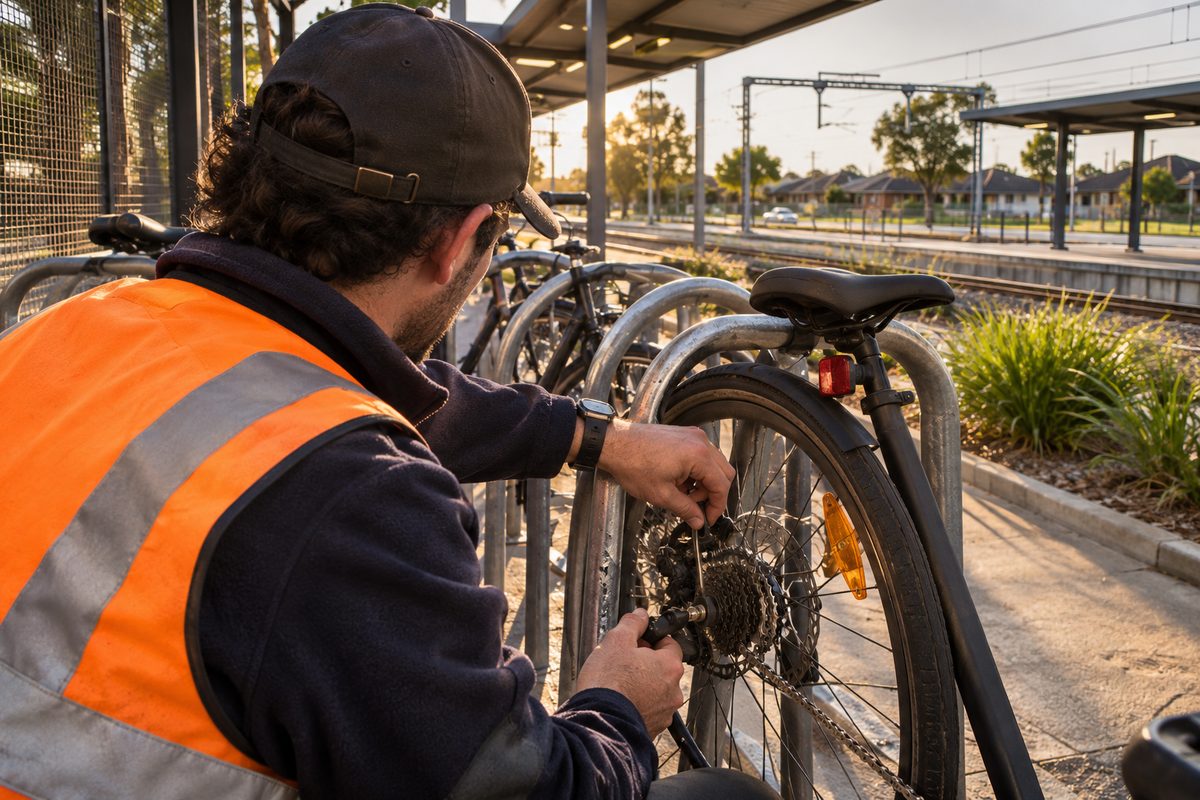
Plan the return trip as carefully as the outward trip. A route that feels comfortable in daylight may have poor lighting at night. Check where bicycle parking is located, bring a strong lock and remove loose items from the bike.
People using a wheelchair, pram or mobility aid should check the full accessible route before leaving. This includes the local footpath, bus boarding conditions, station entrance and lift status. Accessible paths can be affected by maintenance even when trains continue running.
How much time should you allow for the full journey?
Measure the trip from your front door to your final destination, not from the station platform. The full journey includes reaching the bus stop or car, travelling to Williams Landing, transferring to the train and walking after you leave the rail network.
For a weekday peak trip, add a buffer at each point where another service or scarce resource is involved. The biggest risks are missing the bus, finding the car park busy and reaching the platform after the doors close. One missed connection can cost more time than leaving home several minutes earlier.
A useful door-to-door plan has these parts:
- Confirm the required arrival time at your destination.
- Select a train that arrives with a reasonable margin.
- Allow time to reach the correct platform.
- Add parking or bus connection time.
- Add a peak traffic allowance for the trip from Point Cook.
- Check live disruptions shortly before departure.
This method also makes different options easier to compare. A car may be faster to Williams Landing but slower overall if parking is difficult. A bus may take longer to reach the station but deliver you beside the interchange with no parking search.
What should occasional travellers know?
Visit the station layout online before a first trip if you need a specific platform, accessible entrance or pickup point. Knowing where to go reduces stress when buses and trains are arriving at the same time.
Save the return journey before entering the city. Mobile coverage and battery levels can fail at inconvenient times. Note the last practical connection back into Point Cook, especially at night or on a weekend when local services may run less often.
Public transport timetables often differ on weekends and public holidays. Major events in Melbourne can increase passenger numbers, while rail maintenance can change the route. Check both directions because an outbound service may operate normally while the return trip has replacement buses.
For more local context before planning your day, use the Point Cook Tideline guide. Keep transport details tied to official live sources, since a local article cannot confirm conditions for the exact minute you travel.
What is the most reliable way to plan the trip?
Use live PTV information for the train and bus, then use current road conditions for the Point Cook leg. A static timetable gives a base plan. Live alerts reveal cancellations, replacement buses and delays that affect the trip you are about to make.
Choose one backup before leaving. That could be an earlier bus, a later train or a safe pickup plan. Avoid building several weak connections into the same journey. Each extra transfer creates another point where a small delay can become a missed service.
Actionable takeaway: Check your exact Point Cook address in the PTV journey planner, choose the train you need, then leave enough time for peak traffic, parking or the bus connection before heading to Williams Landing station.