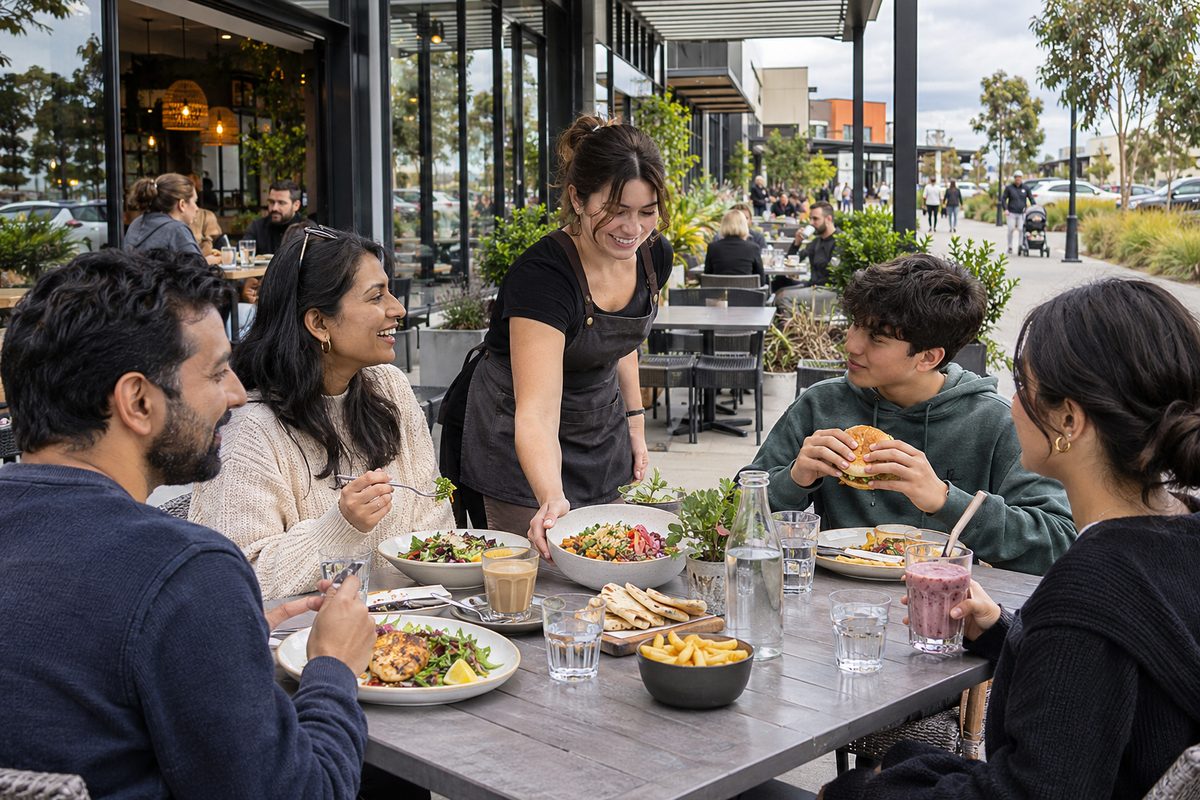
Point Cook Town Centre Places to Eat
Point Cook Town Centre has places to eat for quick snacks, café meals, family dinners and relaxed catch-ups, with the best choice depending on your meal, group and available time. The dining options sit across different parts of the centre rather than in one dining strip. That makes location as useful as cuisine when deciding where to go.
A quick visit may suit the Food court or a takeaway outlet near the shops. A longer meal may work better around Main Street, where the setting is more suited to sitting down and talking. Before leaving home, check the current Stockland Point Cook directory and the venue's own booking or social page. Operators, menus and trading hours can change.
Which part of the town centre suits your visit?
Start by deciding how you want the meal to feel. Point Cook Town Centre combines an indoor shopping centre with open-air streets and dining areas. A venue that looks close on a map may sit in another section of the complex, so allow time to park and walk.
The indoor area is useful when food is part of a shopping trip. It gives you access to quick service, nearby retail stores and protection from poor weather. The outdoor streets suit people who want the meal to be the main event. Main Street is the clearest place to begin when looking for a Restaurant with table service or a setting that feels less like a shopping break.
Parking location matters when travelling with small children, an older relative or a person with limited mobility. Choose the venue first, then look for the nearest suitable car park. Parking at the first entrance you see can add an avoidable walk through the centre.
The centre can also become busy at common meal times. If your group dislikes noise or queues, choose an earlier sitting and confirm whether the venue accepts bookings. A hypothetical family arriving for a 6 pm meal will usually have more room to solve seating or menu issues than the same family arriving during the main evening rush.
What should you choose when time is limited?
The Food court and Fast food outlets are the practical choices when speed matters. They let each person order separately, which helps when a group cannot agree on one cuisine. They also make the total cost easier to control because prices are visible before anyone sits down.
Quick service works well before an appointment, during a work break or between errands. It can be less comfortable for a long conversation, a large celebration or a meal with several prams. Seating may be shared, and finding one table for a large group can take longer than ordering the food.
Use a simple time test. If you have less than 30 minutes, choose food that is prepared quickly and does not require table service. If you have about an hour, a casual café or Restaurant may be possible outside the busiest period. For a group meal, allow extra time for ordering, split payments and different serving times.
Do not assume takeaway is always faster. A popular outlet may have a long queue while a nearby sit-down venue has open tables. Checking the queue when you arrive gives a better answer than relying on the style of business alone.
Where does a sit-down meal make more sense?
A sit-down venue makes sense when comfort, conversation and shared time matter more than speed. Look toward the open-air dining areas and Main Street first. These parts of the centre are designed for moving between separate shopfronts, so they offer a different experience from eating beside the retail floor.
Check the menu before booking. A broad menu helps mixed groups, but a focused menu may be better when everyone wants the same style of food. Look for useful details such as side dishes, children's choices, vegetarian meals and clear notes about allergens. A menu should solve the needs of the whole table, not simply feature one appealing dish.
Table layout also matters. A booth may suit four people but create problems for a high chair or wheelchair. Outdoor seating can feel pleasant on a mild day, yet Point Cook weather can change quickly. Ask whether outdoor bookings have a covered or indoor backup.
For a birthday or larger gathering, contact the venue directly. Confirm the maximum table size, cake rules, deposits and whether bills can be split. These details can differ between businesses and may change during busy periods.
How should breakfast, lunch and dinner shape the choice?
Breakfast calls for an early check of opening hours. The shopping centre and individual food businesses may begin trading at different times. A café listed within the centre is not necessarily open when the first retail stores or supermarkets open. Check the specific date, especially on Sundays and public holidays.
For a full guide to cafés and morning meals, use the separate Point Cook Tideline coverage of local brunch options. Within the town centre, keep the decision simple: decide whether you need a fast coffee and small item or a seated cooked meal. That choice quickly removes unsuitable venues.
Lunch offers the widest range of formats because retail activity is already under way. Workers may favour a quick order, while shoppers and parents may want a café table. If the group includes people arriving separately, choose an easy-to-find meeting point and name the exact business. Saying “meet at the town centre” is too vague for a complex with several entrances.
Dinner shifts the focus toward seating, bookings and closing times. Some daytime businesses may close before the evening period, while other venues trade later. Confirm when the kitchen stops taking orders rather than relying only on the stated closing time. The kitchen may finish service before the doors close.
For an evening meal, consider the trip back to the car. A venue near a suitable car park can be more useful than one that saves a few dollars but requires a longer walk with tired children or takeaway containers.
How can families make the meal easier?
Families should compare logistics before menu size. Check for high chairs, space beside the table, nearby toilets and meals that can arrive without a long wait. A children's menu helps, but familiar side dishes and flexible serving options can be equally useful.
Young children often cope better with an earlier meal. Arriving before the main Dinner period may reduce waiting and make it easier to find a suitable table. Ordering children's food first can also prevent the meal from becoming a test of patience, though the venue must agree to stagger the order.
The Food court gives families flexibility because each person can choose a different outlet. Its shared setting also makes normal child noise less noticeable. A table-service Restaurant offers more comfort, but the family must stay seated for longer and wait for a single ordering process.
A useful hypothetical example is a family with one adventurous eater and one child who accepts only plain food. Choosing by cuisine alone may fail. Checking whether the venue can serve a plain side, sauce separately or a simple protein gives the family a better chance of an easy meal.
What works best for groups with different tastes?
Mixed groups need a venue format that reduces friction. Shared seating near several quick-service outlets lets each person control their own order. This works well for casual gatherings where eating together matters more than having every dish arrive from one kitchen.
For a seated meal, review the menu for range across price points and food needs. Check whether there are meat-free choices, lighter meals and dishes suitable for children. People managing allergies should contact the venue directly. A menu label cannot explain every preparation method or the risk of cross-contact in a working kitchen.
Payment rules deserve attention before a large group sits down. Some businesses accept split bills while others require one payment. Agreeing on the method early avoids a slow discussion at the counter after the meal.
Groups should also set a clear price range. A person suggesting the venue can share the menu link before booking. That gives everyone a private way to check prices and dietary choices without having to raise the issue at the table.
How can you compare value without choosing the cheapest meal?
Value includes portion size, service, seating and convenience. A cheaper meal is poor value if it does not suit the group or causes a long delay. A higher menu price may be reasonable when it includes table service and a setting where people can stay and talk.
Compare the likely full order rather than the price of one main dish. Drinks, sides and add-ons can change the total. Lunch specials or set offers may help, but read what is included and when the offer applies. Public holiday surcharges and card fees can also affect the final bill where disclosed.
For families, value may mean a venue where adults can eat a proper meal while children have suitable choices. For workers, it may mean reliable service within a fixed break. For friends meeting after a long gap, a quieter table may have more value than saving a few dollars.
Use current menus where possible. Photos of old menu boards, third-party listings and past social posts may show prices or dishes that no longer apply.
Where should dessert fit into the plan?
Dessert can be part of the same booking or a separate stop. Staying at one venue is easier for families and large groups. Moving elsewhere gives people more choice and can turn a meal into a walk through the town centre.
If you plan a second stop, check its closing time before ordering the main meal. A dessert business may stop serving earlier than expected on a quiet night. Distance matters too. What looks nearby may require crossing a car park or walking around another section of the centre.
A separate dessert stop works best when the group can move easily and has not booked transport for a fixed time. It may be less practical in rain, with a pram or when someone needs accessible parking close to the door.
How do you avoid outdated dining information?
Use the Stockland Point Cook directory to identify current businesses and their location within the centre. Then verify the final details through the venue's own website, booking system or recent social updates. Directory pages can show the shop, but the operator is better placed to confirm bookings, kitchen hours and temporary changes.
Check the date attached to menus and posts. Search results can retain old business names after a tenancy changes. Review sites may also combine comments from different periods, so one old complaint or praise should not decide the meal.
For public holidays, contact the venue if the meal matters. Automated trading-hour notices can be wrong when individual businesses choose different schedules. Ask a direct question such as, “Is the kitchen taking dinner orders at 7.30 pm on Monday?” That produces a more useful answer than asking whether the venue is open.
Accessibility details also deserve direct confirmation. Ask about step-free entry, table space and the nearest accessible parking if anyone in the group needs them. General centre access does not prove that every table layout will suit every guest.
What is the simplest way to make the final choice?
Reduce the decision to four facts: the meal time, the group's food needs, the desired pace and the easiest part of the centre to reach. These facts point toward quick service, a café or a table-service venue without requiring a long search.
- Choose the format. Use quick service for speed and separate orders. Choose table service for comfort and conversation.
- Check the exact location. Confirm whether the venue is indoors, near Main Street or in another part of the Stockland centre.
- Verify today's details. Check the menu, kitchen hours, booking rules and dietary information through a current official source.
- Plan arrival. Pick the nearest suitable parking area and allow extra time during busy Lunch and Dinner periods.
Point Cook Town Centre works best when you choose for the occasion rather than chasing one universal “best” place. A Fast food outlet can be right during a short shopping trip, while a Restaurant suits a planned evening with friends. Breakfast needs an opening-hours check, and dessert may need its own timing plan.
Before you leave, choose one dining format and verify the venue's menu, kitchen hours and exact location for that day.