Free Family Activities in Point Cook
The best free family activities in Point Cook combine the coast, local parks, nature walks and indoor library time. You can build a full outing without paying an entry fee. The key is to choose one main activity, then add a flexible stop nearby. This keeps the day easy when children lose interest, the wind rises or plans change.
Point Cook suits this approach because its free places offer very different experiences. Families can look for shorebirds, follow a shared path, kick a Ball or spend a quiet hour at Point Cook Library. A simple plan can work for toddlers, school-aged children and adults without forcing everyone to enjoy the same thing for hours.
How can you plan a free day without making it feel empty?
Start with an activity that gives the outing a clear purpose. A walk becomes more engaging when children have something to find. A park visit lasts longer when you bring a picnic. A library trip feels like an event when each child chooses a book to read later.
A useful formula is one anchor activity plus one optional stop. You might begin at Point Cook Coastal Park, then visit a nearby play area if the children still have energy. On a wet day, make Point Cook Library the anchor and add a short walk during a break in the rain.
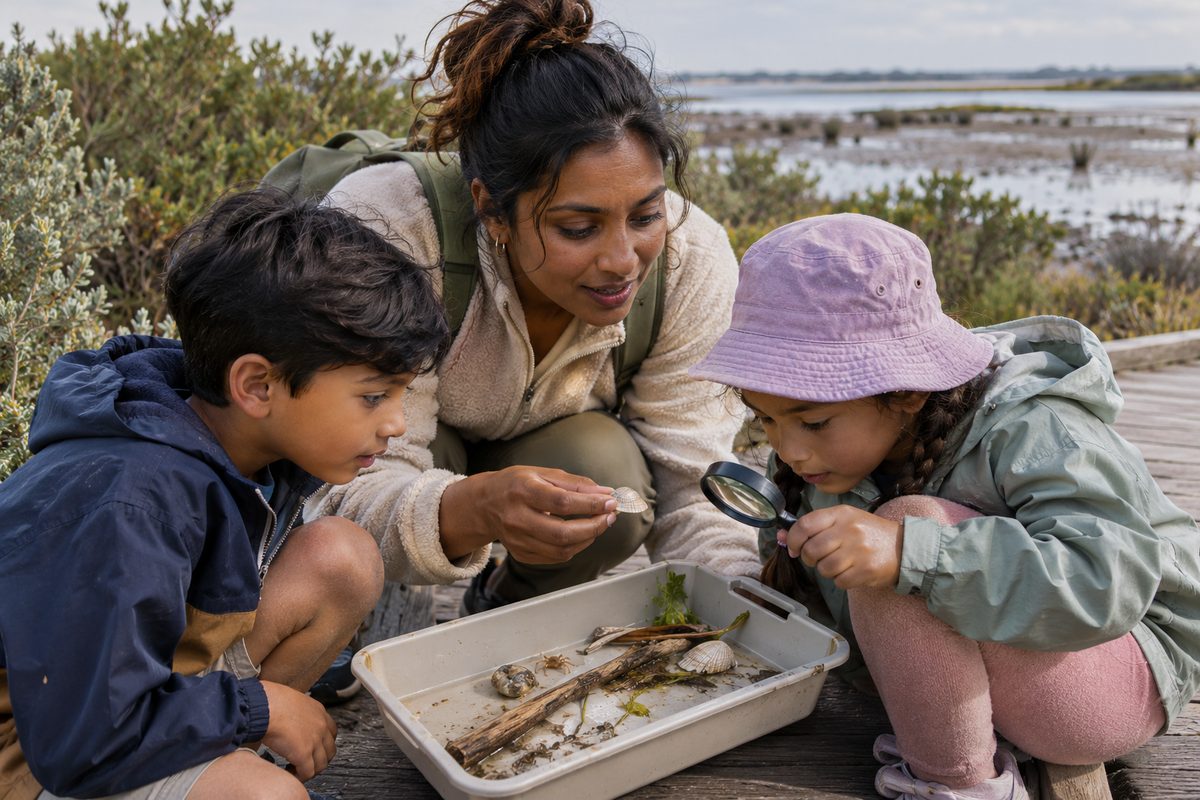
Do not judge a free outing by how many places you visit. One hour spent watching birds or exploring a path can be more rewarding than rushing between several stops. Leave room for children to inspect shells, watch insects and ask questions.
What can families do at Point Cook Coastal Park?
Point Cook Coastal Park offers space for walking, picnicking and observing the edge of Port Phillip Bay. The changing shore is the main attraction. Wind, tide and cloud can make the same route look different on each visit.
Turn the walk into a simple observation game. Ask children to find four natural colours, spot two types of bird or listen for sounds made by water and wind. Keep the task open enough that younger children can join without needing to identify species.
The coast also gives parents a clear way to explain a Marine coastal ecosystem. Children can see how land, shallow water, plants and wildlife connect. They may notice birds feeding near the shore or small tracks in damp ground. Explain that an empty-looking patch of mud can still hold food and shelter for living things.
Check official park notices before leaving home. Coastal conditions can change, and some areas may have access rules designed to protect wildlife or visitors. Stay on formed tracks, take rubbish home and follow signs about dogs. These small choices help protect nesting and feeding areas.
How do you make Cheetham Wetlands interesting for children?
Cheetham Wetlands works best as a slow nature activity rather than a long march. The area is known for wetland habitat and birdlife, so the goal is to stop, look and listen. Families should use designated public access routes and respect any closed or protected areas.
Birdwatching becomes easier when children have a job. One child can count birds on the water while another looks for differences in beaks or leg length. Younger children can search for movement instead of trying to name each species. This removes the pressure to know what every bird is.
A phone camera can serve as a field notebook. Take a distant photo without moving closer to wildlife, then identify the bird at home through a trusted field guide. Avoid playing bird calls from a phone because recorded sounds can disturb birds.
Wetlands also teach patience. Birds may stay still for several minutes before feeding or flying. A child who first says there is nothing to see may begin noticing ripples, tracks and changes in the flock once the family pauses. Keep voices low and let the place provide the activity.
What can children do at a local park without special equipment?
Any open Park can support free play when the family brings one small idea. You do not need sports gear or a planned lesson. Children can follow a shadow, collect fallen leaves for a temporary pattern or measure how many steps it takes to cross an open space.
A Ball creates several games without fixed teams. Roll it between markers, practise gentle kicks or make a target with two drink bottles. Choose a clear area away from roads, cyclists and picnic groups. Take every item home when you finish.
For a quieter activity, give each child a small piece of paper and ask them to draw a map of the park. They can mark paths, trees, seats and anything unusual. The map does not need to be accurate. Its value comes from making children look closely at the place around them.
Families seeking playground details can use the Point Cook Playground Guide published by Point Cook Tideline. That guide covers play equipment and visit checks in more depth. For this free-day plan, treat a playground as a short energy stop rather than the whole outing.
How should families choose between Bayview Park and Crocodile Park?
Names in local conversations and map listings can cause confusion. Bayview Park and Crocodile Park may appear in searches when families look for distinctive play areas in Point Cook. Confirm the map pin, current name and route before leaving, especially if a child expects a specific feature.
A child asking to see a Crocodile may mean a play feature, nickname or remembered shape rather than a live animal. Set that expectation before the trip. Point Cook parks are public recreation spaces, not wildlife attractions with captive crocodiles.
Choose the location by what your family needs that day. Check whether the route suits a pram or bike and whether the expected play feature matches the child’s age. Also check recent council information for works, closures or changed access. Public spaces can be altered, and an old photo may no longer show the current layout.
Keep the stop short if you are pairing it with the coast or wetlands. Children often enjoy a focused burst of active play after a quiet nature walk. Bring drinking water and check surfaces before play, particularly after rain or during hot weather.
What free activities are available at Point Cook Library?
Point Cook Library is the strongest indoor option when the weather makes an outdoor day hard. Families can browse books, read together and use the visit to explore a child’s current interest. Library access is free, though borrowing and some services may require membership.
Ask each child to choose one book for pleasure and one connected to the local area or natural world. A book about birds can extend a visit to Cheetham Wetlands. A story about the sea can lead to a drawing activity after a coastal walk.
Libraries may run free sessions or school-holiday activities, but dates and booking rules change. Check the current Wyndham City Libraries program before promising a particular event. Some sessions fill quickly, while normal reading and browsing remain useful without a scheduled program.
Try a family reading challenge during an ordinary visit. Set a short time and ask everyone to find a surprising fact. Each person shares one discovery before leaving. This gives the visit a clear end and helps children take part without needing to sit still for a long session.
How can a walk become a game without buying anything?
Use a search list based on features that are likely to be present. Look for a curved path, an animal track, a rough surface and something moved by the wind. Do not ask children to collect natural objects in protected places. Finding and photographing them is enough.
Older children can estimate distance or time. Ask them to guess how long it will take to reach a visible point, then compare the guess with the result. They can also create a route back using remembered landmarks. Adults should retain control of navigation and road safety.
Another option is a silent minute. Stop in a safe place and listen without speaking. At the end, compare the sounds each person noticed. This works well near the coast because wind and birds can mask quieter sounds at first.
Keep competition light. The goal is attention, movement and shared time. If one child wants to race while another wants to inspect a leaf, split the activity into short turns so neither style controls the whole outing.
What should families pack for a free outing?
Pack for comfort rather than entertainment. Bring water, food, sun protection and a small rubbish bag. Add a warm layer because conditions near the bay can feel cooler than inland streets. Closed shoes are useful on uneven or damp paths.
A basic observation kit can fit in a pocket. Paper and a pencil allow children to draw, count or record what they see. Binoculars are helpful for Birdwatching if you already own them, but they are not required. A phone camera can record distant details without approaching animals.
Avoid packing so much that the outing becomes hard to manage. Free family activities work well because they can start and end quickly. If a toddler becomes tired or the weather turns, leaving should be simple.
When is the best time to use outdoor free spaces?
Morning often works well in warmer months because play surfaces and open paths have had less time to heat. Coastal wind can strengthen later in the day, though conditions vary. Check the Bureau of Meteorology forecast and any official warnings before visiting exposed areas.
Bird activity and viewing conditions can change with weather and tide. Families do not need to chase the perfect time. A quiet observation session still has value even when few birds are visible. Look at plants, water movement and signs of human care such as fencing or marked paths.
After heavy rain, expect wet ground and possible path changes. Do not enter flooded sections or cross barriers. On days of severe heat, storms or poor air quality, choose Point Cook Library or postpone the outing.
How can you build a free half-day plan?
Choose a plan that can shrink without feeling like a failure. A coast-focused morning might begin with a short walk at Point Cook Coastal Park, continue with careful observation near an approved public viewpoint for Cheetham Wetlands and finish with food at a suitable picnic area.
An active plan can begin at a local Park with a Ball, followed by a short walk and a play stop. An indoor plan can centre on Point Cook Library, with drawing or reading at home afterwards. Check opening hours, access details and current notices on the day.
Use these steps before leaving:
- Pick one main place and save its current map location.
- Check the weather, opening information and official access notices.
- Pack water, food, sun protection and any needed warm layer.
- Choose one optional nearby stop that can be skipped without spoiling the day.
Take one action today: choose a single free Point Cook destination, check its current access details and set a simple purpose for the visit.