Point Cook School Holiday Ideas
The best Point Cook school holiday ideas mix one outdoor outing, one simple indoor activity and enough free time for children to choose what happens next. You do not need to fill every hour or drive across Melbourne each day. Point Cook has coastal habitats, shared paths, aviation history and easy links to nearby Werribee. Use those local strengths to build flexible days around your children’s ages, energy and interests.
A good plan also leaves room for changes. Weather can turn a beach morning into a library or craft session. A tired child may enjoy a short bike ride more than a full-day attraction. Pick one main activity, prepare a backup and protect some time for rest.
How can you plan the holidays without filling every day?
Start with the shape of the break rather than a long list of places. Mark any work days, appointments and family events first. Then add two or three anchor outings across each week. These are the activities that need more time, travel or advance booking.
Keep the days between them lighter. A local walk, home project or picnic can be enough. Children often need slower days after the routine of the Academic year. A packed calendar can turn a holiday into another timetable.
A simple weekly rhythm might include:
- One half-day nature outing close to home.
- One booked activity, workshop or larger day trip.
- One home day with a creative project and outdoor break.
- Several open periods for friends, reading, games or rest.
Ask each child to choose one priority for the break. Put realistic choices on the table, such as a beach walk, museum visit, baking afternoon or trip to Werribee. This gives children some control without making the plan hard to manage.
Which outdoor ideas make the most of Point Cook?
Point Cook Coastal Park is a strong choice for a low-cost outing. Families can combine a walk, picnic and time near the coast without building the day around paid entry. Choose a distance that suits the youngest walker and turn back before anyone becomes tired.
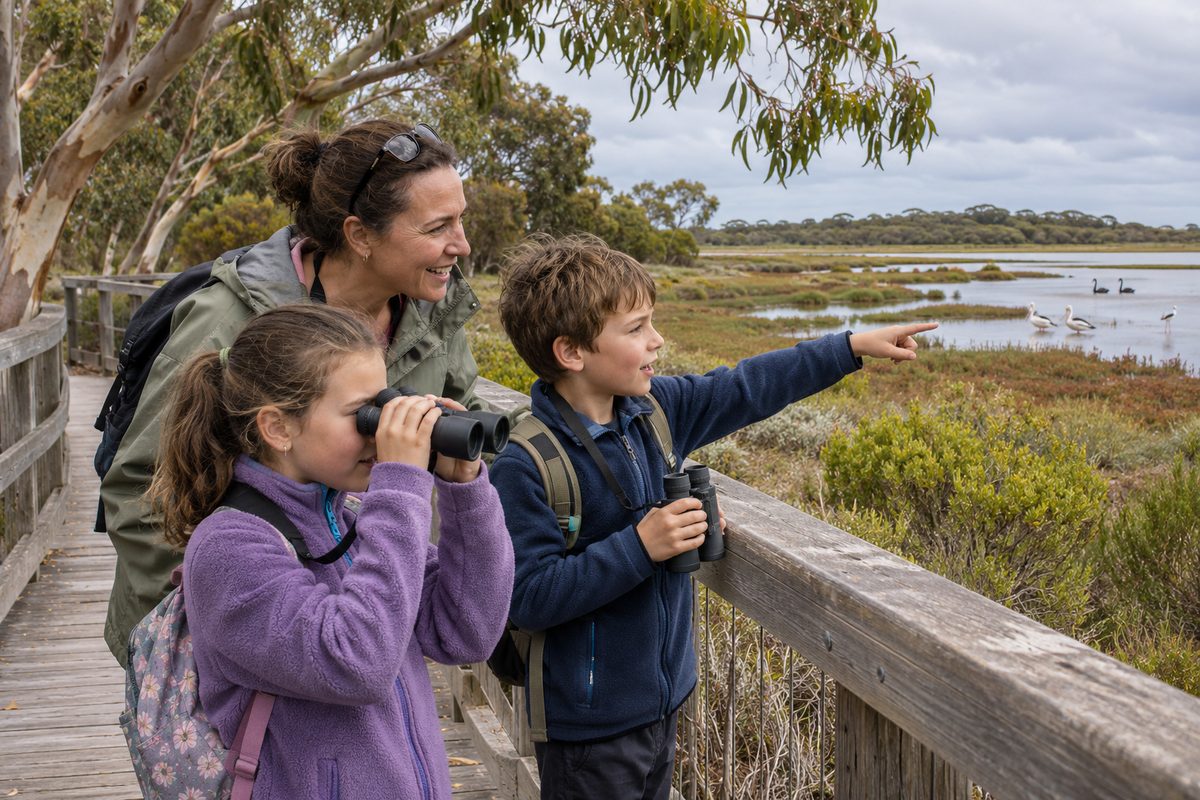
Bring binoculars if you have them. Wetlands and coastal areas can support varied birdlife and other Wildlife, although sightings are never guaranteed. Encourage children to notice movement, tracks, feathers and different plant shapes. Looking carefully gives the walk a purpose without turning it into a lesson.
A simple observation sheet works well for primary-aged children. Divide a page into boxes for something flying, something growing near water, a human-made object and an unfamiliar sound. Older children can photograph signs of erosion, habitat or changing tides, then compare their images at home.
The Point Cook Homestead area can add a history angle, but access and operating arrangements may change. Check current public access before leaving. Even when a building is not open, the wider coastal setting can help children picture how distance, farming and transport shaped life before modern Point Cook developed.
Shared paths also suit scooters and bikes. Pick a route with a clear turnaround point rather than setting a distance target. Check helmets, brakes and tyre pressure before leaving. Carry water, sunscreen and a small repair kit if you plan to ride far from home.
For a shorter outdoor break, choose a neighbourhood oval or reserve and bring one item that creates several games. A ball can support kicking practice, target games and improvised rules. This article does not repeat the full local play-area advice covered in the Point Cook Tideline playground coverage. The useful holiday principle is simpler: match the outing to the child’s energy, then leave while it is still enjoyable.
What can children do around the bay and wetlands?
Coastal activities work best when the aim is exploration rather than swimming. Point Cook’s coast can have mud, rocks, seagrass, changing water levels and sensitive habitat. Stay on permitted paths, follow signs and supervise children near water.
Try a colour hunt using shades found in shells, plants, sand and sky. Children can record colours with pencils rather than collecting natural material. Another option is a sound map. Sit quietly for two minutes, mark where each sound came from, then compare maps.
Tides and wind affect how the shore looks and feels. Check the forecast and local conditions before setting out. Avoid exposed coastal walks during severe heat, strong wind or storms. A cool morning often suits younger children better than a long afternoon outside.
Families can also run a small litter survey. Wear gloves, use tongs and collect only safe items from an approved public area. Adults should handle anything sharp or unknown. Sort the safe waste by material at home and discuss which items could have been reused or disposed of better.
Which nearby day trips add something different?
Werribee expands the options without requiring a trip into central Melbourne. Families can choose a major attraction, a riverside outing or a shorter visit built around food and a walk. Travel time and ticket costs vary, so check the destination’s official details before promising the day to children.
Werribee Open Range Zoo may suit families seeking a full-day animal experience. It involves more walking, planning and expense than a local nature walk. Compare ticket rules, session times, accessibility needs and food costs before booking. Set a spending limit for extras so the day does not become stressful.
Werribee Park and its surrounding precinct may offer another mix of open space, gardens and heritage. Public access, tours and individual venue hours can differ. Confirm which areas are available on your chosen date.
A trip toward Melbourne can work when there is a specific exhibition, performance or family event worth the longer journey. Avoid travelling to the city only because the local plan feels too small. A focused half-day nearby will often hold a child’s interest better than several city stops joined by queues and transport.
How can aviation become a full holiday project?
Point Cook has a direct connection to Australian military aviation. The RAAF Museum has long been associated with RAAF Base Point Cook, but entry arrangements, opening periods and security requirements can change. Check official information before making it the centre of your day. Do not rely on an old directory listing or social media post.
You can still use local aviation history as the start of a home project. Younger children can design a paper aircraft, change one feature and test how far it flies. Keep the launch point and paper type the same so the test is fair. Record each distance, then discuss why the result changed.
Older children can research how aircraft design changed as materials, engines and flight needs changed. Ask them to produce a one-page timeline or label the main parts of an aircraft. Keep the task narrow. A clear question such as “How does wing shape affect flight?” produces better work than a broad report on aviation.
If official access to the RAAF Museum is available, prepare children before the visit. Explain that it is a museum within a working defence setting and that entry rules must be followed. Give each child one thing to find, such as an early aircraft material or a cockpit control. This turns looking into active observation.
What works when the weather keeps everyone inside?
Build a wet-day box before the holidays begin. Use supplies already in the house where possible: paper, tape, pencils, cardboard, string and clean containers. Add a list of short challenges so nobody needs to invent an activity while children are restless.
Useful challenges include building a bridge from cardboard, creating a board game about Point Cook or drawing a map of an ideal local day. Set a time limit of 30 to 60 minutes. A defined finish makes the task easier to start.
A local history collage can introduce design ideas linked to the Arts and Crafts movement. Explain that the Arts and Crafts movement valued skilled making, useful objects and visible natural materials. Children can apply that idea by designing a simple bookmark, storage box or poster with repeated plant patterns. Make clear that this is a creative link, not a claim that Point Cook was a centre of the movement.
Cooking also gives children a practical task. Choose one recipe with jobs suited to each age, such as measuring, mixing or shaping. Read the full recipe first and check allergy needs. Let children calculate how the amounts change if the recipe is doubled. The result is lunch or afternoon tea, so the activity serves a real purpose.
Libraries, community centres, sports providers and shopping centres may publish school holiday programs. Sessions, costs and age limits change each break. Confirm the organiser, booking terms and supervision rules through an official source before attending.
How do you choose ideas for different ages?
For children under five, keep outings short and familiar. One new feature is enough. A picnic beside an open space, a short nature hunt or water painting on concrete can fill the active part of the day. Plan around meals and sleep rather than trying to extend the outing.
Primary-aged children often enjoy a goal. Give them a map, checklist, photo task or building challenge. They can help pack the day bag and choose between two approved plans. This age group may also enjoy seeing a friend, but avoid making every activity a group event.
Teenagers need more say in the plan. Offer a real role, such as choosing the route, planning a food budget or taking photographs for a short video. A coastal walk may feel more worthwhile when it includes a purpose they chose. Agree on phone use, spending and return times before leaving.
For mixed ages, avoid forcing everyone through the same task. At a nature stop, one child can search for birds while another sketches or takes photos. At home, younger children can decorate a cardboard model while older children handle measurements and construction.
How can you keep holiday costs under control?
Set the budget for the whole break before booking anything. Separate fixed costs, such as tickets, from costs that grow during the day, such as snacks, parking and souvenirs. A “free” outing can still become expensive if every meal is bought away from home.
Use paid attractions as anchor days and place free local activities around them. Pack food and refillable water bottles when venue rules allow. Check whether family tickets, memberships or public transport caps offer real value for your group. A discount has no value if it pushes you toward an activity you would not otherwise choose.
Create a small holiday fund for child-led choices. State the amount at the start. A child can spend it on one item, save it for another day or use it for a shared treat. This prevents repeated negotiations and gives older children useful practice with limits.
What should you check before each outing?
Check current opening details, bookings, travel time and Weather on the day. For coastal or nature outings, also consider heat, wind, water conditions and track access. For organised sessions, confirm the age range, supervision level, cancellation terms and what children need to bring.
Pack for the actual plan rather than carrying everything. Most local outings need water, sun protection, suitable shoes, any required medicine and a basic first-aid item. Add spare clothes for water, mud or craft sessions. Save the destination address and a contact number before leaving.
Tell children what the day will include and when it will end. Clear limits reduce arguments about extra stops or purchases. If the main plan fails, use the backup without treating the day as ruined.
What is a simple seven-day plan?
- Day one: Take a short coastal walk and complete a sound map.
- Day two: Stay home for a cardboard building challenge, then visit a local oval.
- Day three: Choose a booked program or major Werribee attraction.
- Day four: Keep the morning free, then cook one recipe together.
- Day five: Ride or scoot on a familiar shared path with a set turnaround point.
- Day six: Explore aviation through an approved museum visit or paper aircraft tests at home.
- Day seven: Let each child choose one low-cost activity from two adult-approved options.
Swap the days to suit bookings and conditions. The pattern matters more than the order: alternate bigger outings with slower days and keep one indoor backup ready.
Choose one local outing, one booked day and one wet-weather project now, then leave the rest of the school holidays open enough for rest and spontaneous plans.