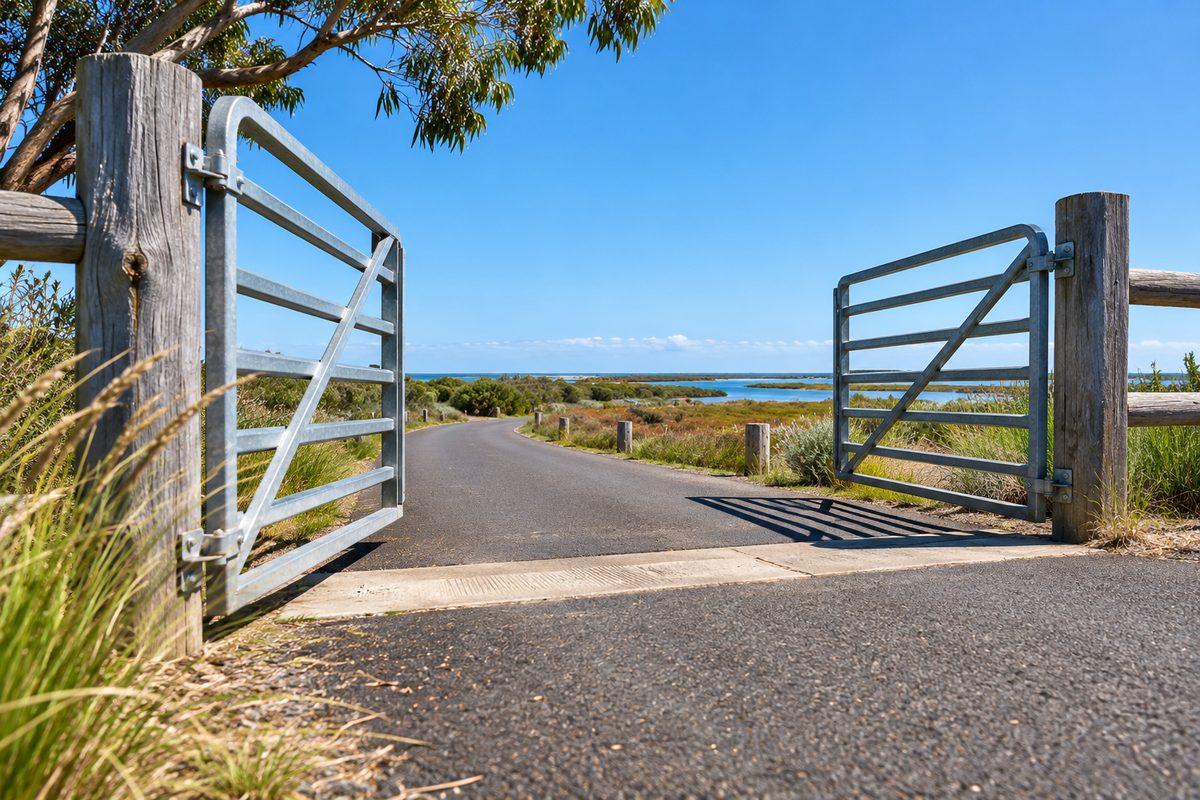
Point Cook Coastal Park Access and Gate Times
Point Cook Coastal Park is generally open to vehicles from 8.30 am to 5 pm, with closing extended to 7 pm during daylight saving. These times may change due to fire danger, severe weather, maintenance or park operations. Check the current Parks Victoria park information before leaving home, especially if you plan to arrive late in the day.
The gate controls Vehicle access from Point Cook Road into the coastal park. It does not mean every walking route follows the same hours. However, visitors should never assume that pedestrian access gives them permission to leave a car inside after the vehicle gate closes. The safest plan is to begin your return well before closing time.
Which entrance should drivers use?
The main public approach begins from Point Cook Road. Follow the signed turn towards Point Cook Coastal Park and Point Cook Homestead, then continue along the access Road to the park entrance. The route passes through open coastal land, so it can feel longer and more remote than a suburban trip of the same distance.
Drivers should use the signed public route rather than relying on a map application to suggest tracks, farm approaches or restricted roads. Some digital maps show lines that are not public vehicle routes. A road shown on a screen may end at a locked gate or serve land managed for conservation.
Allow extra travel time after leaving the built-up part of Point Cook. The final approach can be slower due to road conditions, cyclists, walkers, wildlife or vehicles entering and leaving narrow sections. Arriving ten minutes before the advertised closing time is not a useful visit and creates a real risk of being locked in.
How should you read the gate times?
The advertised gate hours are entry and exit limits for vehicles, not a promise that staff will wait for late visitors. Treat the closing time as the point when your car must already be outside the gate.
Daylight saving changes in Victoria do not occur on the same calendar date each year. The extended 7 pm closing period usually follows the official Victorian daylight saving season, while the 5 pm time applies outside that period. Confirm the current arrangement through Parks Victoria instead of judging it from sunset alone.
A bright evening does not keep the gate open. Sunset may occur after the winter closing time or well before the summer closing time during poor weather. The clock and any instructions posted at the entrance take priority.
Temporary closures can also override normal hours. High fire danger, flooding, damaged roads, pest control, conservation work or an emergency may affect access. Signs and barriers at the park are instructions, even when an older online listing says the park should be open.
When should you start heading back to the car?
Set your own turnaround time at least 30 minutes before the gate closes. Use a larger margin if you are visiting the shore, walking with children, taking photographs or moving at a slower pace.
Distance can be hard to judge on a flat coast. A relaxed walk away from the car may take longer on the return because of wind, fatigue or a stop to clean sand from shoes. Mobile reception and battery life should not form the whole plan.
A useful method is to save the closing time in your phone when you arrive, then set two alarms. The first marks the end of the activity. The second means everyone should be at the vehicle and preparing to leave. This simple step prevents a picnic, birdwatching stop or Beach walk from running into the final minutes.
Before walking away, read the entrance sign and any notice near the Parking area. Take a photo of the stated closing time if the group may split up. Every adult should know where the car is parked and when the group will meet there.
What happens if a vehicle remains inside?
A locked gate can leave a vehicle in the park after closing. Do not drive around barriers, use unauthorised tracks or damage a gate. These actions can harm protected land and may put people at risk.
If the gate is locked, first read the signs for official contact or emergency instructions. Contact Parks Victoria through the number displayed at the site or its published information service. Call emergency services only when there is an immediate threat to life or safety.
Being locked in may cause a long delay and could require staff assistance. It may also leave passengers without food, warm clothing or enough phone power. Avoid the problem by treating the posted closing time as firm and building in a margin.
Do not park where a gate, emergency route or turning area could be blocked. Even during open hours, poor Parking can delay rangers and emergency vehicles.
Can walkers and cyclists enter without using the vehicle gate?
Pedestrian and cycling access may differ from vehicle access, but visitors must follow every sign at the entry they use. A path beside a gate is not proof that the whole park is open at all hours. Temporary closure signs apply to people on foot and bicycle as well as drivers.
Walking into the park also changes the safety plan. There may be limited lighting, long distances between facilities and few people nearby late in the day. Carry water, a charged phone and weather protection. Use a torch if there is any chance of returning near dusk, but do not plan a late visit on the assumption that a torch solves access limits.
Cyclists should expect other road users on the approach. Ride predictably, use lights when visibility falls and avoid blocking the vehicle route while stopping. Coastal wind can make the return ride slower than expected, so set the turnaround time from the gate closing time rather than from sunset.
Where can you park once inside?
Use marked public Parking areas and obey all signs. Do not leave a vehicle on grass, near a management track or beside a closed section of road. Soft shoulders can become boggy after rain, while dry grass can present a fire risk during hot weather.
Parking availability can shrink on warm weekends, public holidays and calm evenings. A full area does not permit parking across an access lane. If no legal space is available, leave and change the visit rather than creating a hazard.
Before locking the car, check that valuables are out of sight and note the route back to the gate. The park has separate points of interest, and visitors can mistake one parking area for another after a long walk. Saving the vehicle location on a phone can help, but a written or visual landmark gives useful backup.
The related guide to Point Cook can help visitors place the coastal park within a wider local outing. Gate planning should remain separate from choosing picnic facilities or play areas, because the vehicle deadline controls the whole visit.
What should visitors with limited mobility check?
Accessibility varies by route, surface, recent weather and the facilities needed. A place being reachable by car does not mean every coastal path is step-free or firm.
Check the current Parks Victoria information for accessible toilets, parking bays, path grades and surface details. Contact the park manager before travel if a person needs a specific clearance, transfer space or firm route. On arrival, inspect the path before unloading mobility equipment.
Allow more time to return to the vehicle. Sand, gravel, puddles and wind can slow wheelchairs, walking aids and prams. A 30-minute buffer may be too small when the group needs time to load equipment safely.
A hypothetical example shows the risk. A family reaches the shore at 4.15 pm during the 5 pm gate period. One person uses a wheelchair, and loading takes 15 minutes. If the group waits until 4.45 pm to turn back, a rough path or blocked parking bay could cause them to miss closing. Turning back at 4.20 pm gives them room to deal with the same delay.
How do weather and fire conditions affect access?
Coastal weather can change faster than conditions in central Point Cook. Strong wind, heat, smoke, heavy rain and poor visibility can make the access road or walking routes unsafe. Check the Bureau of Meteorology forecast and Victorian emergency warnings before a visit.
On days of serious fire risk, parks may close or restrict entry. Never move a barrier because conditions look calm at the gate. Fire danger relates to fuel, wind and response limits across the area, not the weather beside one car.
Rain can affect unsealed edges and low sections. Drive to the conditions, keep to the formed road and avoid water of unknown depth. If a route is closed, turn around where it is safe. Driving onto vegetation can damage habitat and leave the vehicle stuck far from help.
Heat also changes how much walking time is safe. Carry enough water and avoid setting out on a long route shortly before closing. The need to beat the gate can push people to walk too fast when they are already hot or tired.
How can you protect wildlife near the access road?
Slow down and watch for Wildlife, especially near dawn, dusk and patches of dense vegetation. Birds may feed beside the road, while reptiles and mammals can cross with little warning. Posted speed limits are maximum limits, not targets.
Keep dogs under the control required by park signs and respect areas where pets are prohibited. Coastal reserves protect feeding and nesting habitat. A dog running through shore vegetation can disturb birds even when it does not catch them.
Stay on formed roads and marked paths. Vehicle tracks across grass or saltmarsh can damage plants and create routes that others then follow. Take all rubbish out or place it in the correct bin where one is supplied. Food scraps can attract animals and change their behaviour.
Wildlife viewing must never delay departure past the gate time. If an animal is beside the road, give it space and wait rather than sounding the horn or driving towards it. This is another reason to leave with time in hand.
Does access to the homestead follow the same plan?
Point Cook Homestead lies within the broader coastal setting, but access to the homestead precinct, buildings or any private operation may follow different conditions from the public park gate. An open park gate does not prove that every building, venue or service is open.
Check the operator’s current information if the homestead is the main reason for the trip. Confirm booking conditions, event access and the time vehicles must leave. Follow signs that separate public park routes from private or restricted areas.
Do not use the homestead as a late exit plan. Your route may still depend on the main park gate, and internal access arrangements can change for events or maintenance.
What should you check on the day of your visit?
Use a short access check before leaving home. It takes less time than dealing with a closure or locked gate.
- Confirm the current vehicle opening and closing times with Parks Victoria.
- Check weather, fire danger and emergency warnings for Point Cook.
- Review the signed route from Point Cook Road rather than following an unverified track.
- Choose an arrival time that leaves enough time for the activity and the return.
- Allow extra time for children, mobility equipment, beach gear or bicycles.
- Carry water, a charged phone and suitable clothing.
- Read all entry signs and set a firm turnaround alarm after arrival.
If the gate hours cannot be confirmed, plan a morning or early afternoon visit. This reduces the risk created by changed seasonal hours and gives you more options if parking is full or part of the park is closed.
What is the safest access plan?
Build the whole visit backwards from the vehicle closing time. Confirm the official time, subtract a return and loading buffer, then decide how far you can travel from the parking area.
For a 5 pm closure, a careful plan may place everyone back at the car by 4.30 pm and outside the gate by 4.45 pm. For a 7 pm closure, use the same margin rather than filling every extra minute. A longer opening period gives more choice, but the final gate remains firm.
Check Parks Victoria on the day, photograph the entrance sign and set your turnaround alarm before you leave the car.