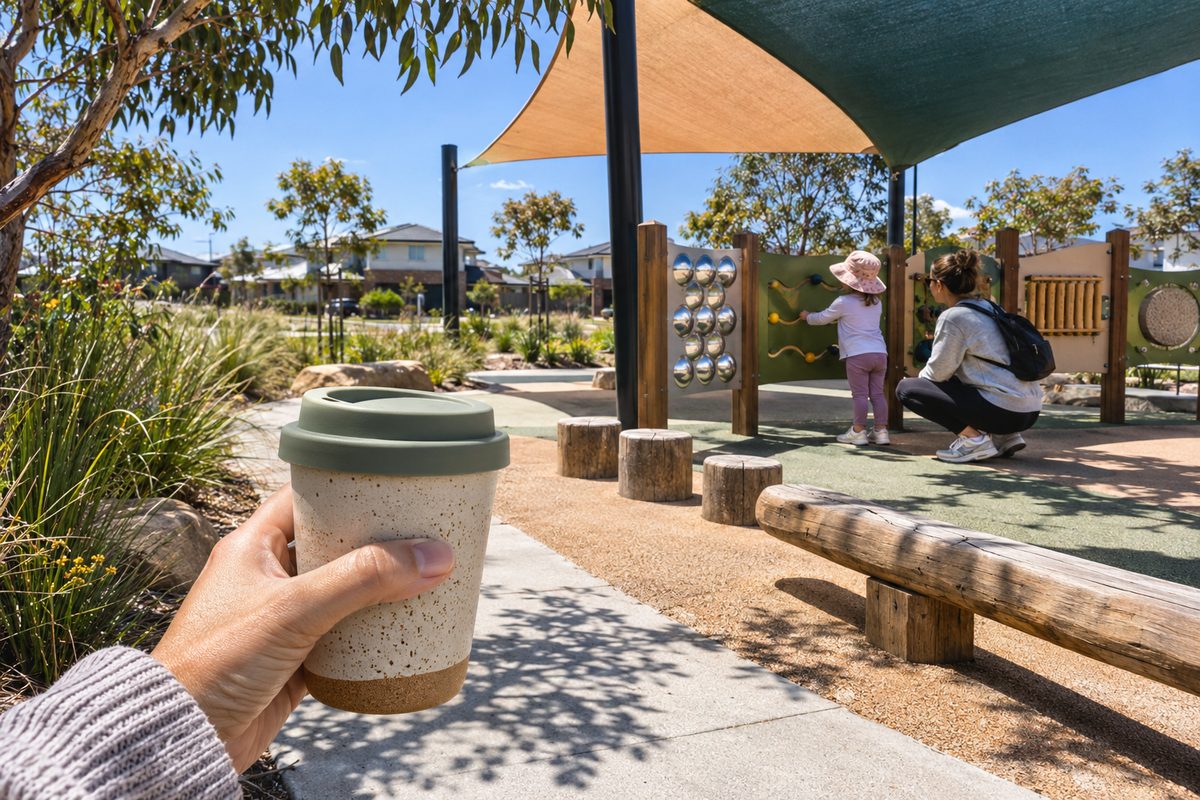
Point Cook Coffee Near Playgrounds
The easiest way to find Point Cook coffee near playgrounds is to start around a local shopping centre, then choose a nearby play space that can be reached without a difficult road crossing. This gives adults access to fresh coffee, food and toilets while keeping the trip simple for families with young children.
Point Cook has several useful café and play areas, but “near” can mean very different things. A coffee shop may sit beside a small play area, across a car park from a reserve or several streets from a large destination playground. The best choice depends on whether you want clear sightlines, Fencing, room for a Picnic or a longer walk through a Park.
This guide focuses on how to pair coffee with play. For details about equipment and individual reserves, use the separate Point Cook local guide before leaving home.
Which parts of Point Cook make coffee and play easiest to combine?
The most practical areas are Point Cook Town Centre, Featherbrook, Sanctuary Lakes, Saltwater Coast and the Jamieson Way precinct. Each combines homes, shops and public Recreation space, though the distance between the coffee counter and the play equipment varies.
Point Cook Town Centre
The town centre offers the widest choice of cafés and takeaway food in central Point Cook. It works well when different family members want different meals or when rain may force a quick change of plan. The trade-off is that the nearest useful play space may require a walk beyond the retail area.
A Shopping mall or town-centre café is convenient, but parents should study the route before promising immediate play. Busy access roads, delivery areas and broad car parks can make a short distance feel much longer with a toddler. This option suits older children who can walk safely beside an adult and families willing to separate the coffee stop from the playground stop.
Featherbrook
The Featherbrook area is useful because neighbourhood shops and open space sit within the same part of Point Cook. Families can collect coffee or a snack, then continue to a nearby reserve without driving across the suburb. Local paths also make this area suitable for prams and scooters when the weather is dry.
Do not assume every route is direct. A reserve may be visible on a map while its gate or path entrance sits on another side. Check the actual walking route, road crossings and access points before ordering food that needs to be carried.
Sanctuary Lakes
Sanctuary Lakes combines retail services, cafés and waterside paths. It can suit families who want a longer walk with coffee rather than a seat directly beside play equipment. The lakeside setting also gives adults and older children more to do after the playground visit.
Water changes the safety needs. A Child who runs ahead needs close supervision near lakes, drains and shared paths. Keep young children within reach, even when the play area itself has Fencing.
Saltwater Coast
Saltwater Coast has community facilities, sports grounds, paths and neighbourhood play spaces. It is a good choice for families who value open room and active Recreation. Coffee choices may be more spread out than those in the town centre, so check current trading hours before building the whole trip around one Coffeehouse.
This precinct works best when the coffee is collected first. Choose a cup with a secure lid and carry food in a closed bag. Open reserves can be windy, and a light paper bag can quickly become litter.
Jamieson Way
The Jamieson Way area offers local shops and community spaces within an established residential precinct. It can provide a quieter alternative to the major retail centres. The useful question is whether the chosen café and play area are on the same side of the main road.
A route that crosses Jamieson Way may be manageable with an older child but awkward with a pram, drinks and a toddler. Check pedestrian crossings instead of relying on the straight-line distance shown by a map.
What does “near a playground” mean with children?
For most families, a café is genuinely near a playground when the full trip can be managed without moving the car. A distance of 200 metres can feel easy on a shaded path. The same distance can feel unsafe across a large car park or busy road.
Use walking time as a first filter, then inspect the route. Look for footpaths, safe crossings, kerb ramps and an obvious entrance. Street View and recent map photos can help, but works and temporary closures may change access.
Age matters more than the number on the map. A preschooler may stop often, refuse the pram or run towards an entrance. A primary-school child may cover the same route with ease. A practical hypothetical example is a parent carrying two hot drinks while guiding a four-year-old past reversing cars. A five-minute adult walk can become the hardest part of the outing.
Direct visibility is the best setup. A café table facing a play space may allow an adult to watch an older child, subject to the site rules and the child’s needs. If buildings, parked cars or shrubs block the view, treat the venues as separate stops.
Should you drink coffee beside the playground or collect it first?
Collect coffee first when the playground has shade, seats and a safe route from the café. Sit at the café first when the play space lacks toilets, the weather is poor or the route crosses traffic.
A seated café visit gives families shelter and access to food, but young children may struggle to wait when they can see play equipment nearby. Takeaway coffee gives them faster access to play, though the adult must manage hot liquid around moving children.
Never place a hot drink at the bottom of a Playground slide, on a platform or beside climbing equipment. Children change direction without warning. Put the cup on a stable table or hold it away from running routes. A sealed reusable cup reduces spills, but it does not make a hot drink safe for a child to handle.
If one adult is supervising several children, finish the drink before active play begins. A free hand is more useful than warm coffee when a toddler needs help on a ladder or near a swing.
Which facilities matter most for a relaxed stop?
Toilets, shade and seating matter more than the size of the playground when coffee is part of the visit. These features decide whether the family stays for ten minutes or an hour.
Toilets
Café toilets may be limited to customers and may not include a change table. Public toilets can also have set opening hours. Check the council or shopping-centre listing before leaving, especially during early mornings and public holidays.
If toilet access is uncertain, use the facilities while buying coffee. This avoids packing up the whole group soon after reaching the playground.
Shade and seating
Point Cook’s open reserves can feel exposed on hot or windy days. Shade over equipment does not always cover nearby seats. Look for a shelter, mature trees or a table positioned close enough for active supervision.
Bring a picnic rug when seating is uncertain. It creates a clean base for bags, food and spare clothes, though it should remain clear of bicycle paths and equipment fall zones.
Fencing and gates
Fencing can reduce the chance of a young child reaching a road, car park or water edge. It does not replace supervision. Check whether the enclosure covers the whole play area and whether gates latch properly.
Partial barriers can create a false sense of security. Walk around the boundary when you arrive. Look for open path connections, damaged panels and gaps near vegetation. This quick check matters most when adults are carrying drinks or supervising siblings of different ages.
How can you plan coffee, food and a picnic without carrying too much?
Order food that can survive the walk. A closed toastie box, wrapped roll or firm baked item is easier to carry than a full plate or open bowl. Ask for fewer loose items if the route includes a pram, scooter or excited child.
For a short Picnic, pack water, wipes, sunscreen and a small rubbish bag. Coffee does not replace water, especially during warm weather. Bring one simple snack from home for a child with allergies or strong food preferences, even when cafés are available.
Check the café menu before the trip if dietary needs shape the outing. Plant-based milk may be easy to find, while allergen-safe meals require more care. Café kitchens can handle several ingredients in the same area, so speak directly with staff about serious allergies.
A local Coffeehouse may have shorter weekend hours than a national chain. Public holidays can also change service times. Confirm hours on the business’s own listing or by phone on the day of the visit.
When is the best time to make the trip?
Early morning is usually the simplest time in warm weather. The play equipment is cooler, parking is easier and cafés are more likely to have fresh breakfast items. Mid-morning can be busier as sport, shopping and family outings overlap.
Wind deserves as much attention as temperature. Point Cook’s flat, open areas can turn a mild day into an uncomfortable playground stop. Choose a sheltered reserve or a café-first visit when strong wind is forecast.
After rain, paths may remain usable while grass and unsealed edges become muddy. A paved route between the café and playground helps families with prams. Pack spare socks if the chosen play area includes sand, water channels or damp grass.
Late afternoon can work well outside summer, but check sunset and café closing times. A playground visit that starts after the coffee shop closes removes access to indoor toilets and extra food.
How do you compare two possible coffee and playground stops?
Judge the whole outing rather than comparing coffee ratings alone. A highly rated café can be the wrong choice if the walk passes heavy traffic or the nearest play area has no shade.
Use this order:
- Check the route. Find the real pedestrian entrance, safe crossings and kerb ramps.
- Check supervision needs. Look for sightlines, water edges, roads and Fencing.
- Check basic facilities. Confirm toilets, seating and shade.
- Check current café details. Verify opening hours, takeaway service and suitable food.
- Check the weather. Review heat, rain and wind close to departure.
This method prevents a common mistake: choosing the best playground and the best café as separate destinations without checking whether they work together. The safer pair with an easier path will often produce the better family outing.
What should you check when you arrive?
Pause before unloading the whole car. Confirm that the café is open, identify the playground entrance and locate the safest walking path. If a route looks different from the map, change the plan before carrying drinks and bags.
At the play area, scan the equipment surface, gates and nearby traffic. Check the Playground slide before use on a hot day. Metal and dark plastic can heat quickly in direct sun.
Choose one clear meeting point for older children. A shelter, bench or gate works better than a vague instruction to stay close. Keep scooters and bikes away from café doors, ramps and busy play routes.
Take all cups, lids and food packaging with you when bins are full. Point Cook’s wind can move light rubbish across a reserve within seconds.
What is the simplest plan for your next outing?
Choose one Point Cook café precinct, map the actual walking route to a nearby playground, then confirm toilets, Fencing, shade and opening hours before you leave.