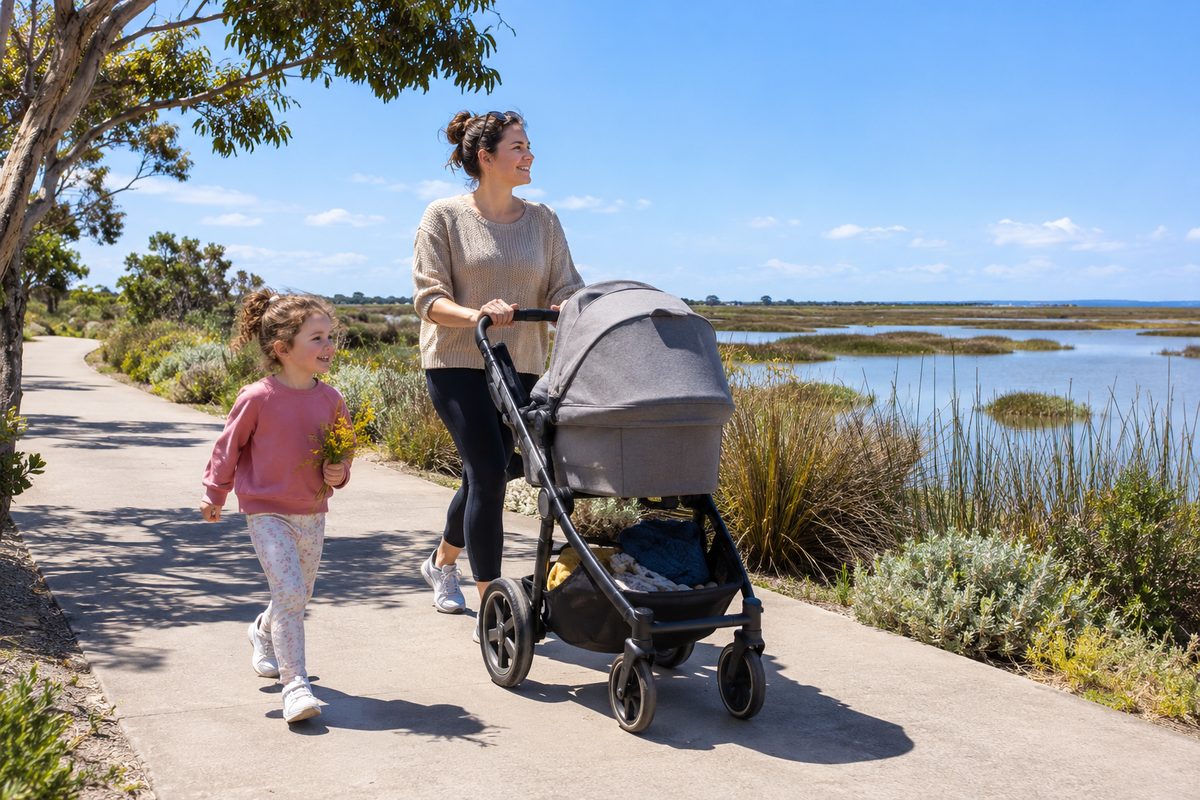
Point Cook Pram Friendly Outings
The best Point Cook pram friendly outings use firm paths, allow a quick return to the car and include a sheltered place to stop. Point Cook Coastal Park, the area near Point Cook Homestead, Cheetham Wetlands and selected local parks can all suit families with a pram. The right choice depends on the path surface, wind, shade and how far you want to walk.
A route that looks short on a map can feel much longer while pushing a loaded pram. Loose gravel, wet grass and steep kerbs add effort. A smooth kilometre may be easier than a rough 400 metres. Plan around the surface and exit points before thinking about distance.
This guide focuses on choosing and planning an outing rather than ranking play equipment. Families comparing local play spaces can also read the Point Cook Tideline for more local guides.
What makes an outing work well with a pram?
A useful pram route has a firm surface, enough width to pass other users and no surprise steps. It should also give you a clear way back if a baby wakes, the wind rises or an older child has had enough.
Accessibility means more than finding a sealed path. Consider the full trip from the parking space to the place you want to reach. A route may have smooth paving but still include a high kerb, a narrow gate or soft ground near the picnic area. Toilets may also sit beyond a surface that becomes muddy after rain.
Baby transport changes how you use a public space. A pram carries nappies, water and spare clothes, but its extra weight makes rough ground harder. A compact stroller is easy to fold yet may struggle on gravel. A pram with larger wheels usually handles uneven paths better, though no pram makes deep sand easy.
Before leaving, check four parts of the route:
- the surface between the car and the main path
- the longest gap between places to stop
- the location of toilets or changing options
- the quickest return route if plans change
This simple check prevents a common mistake: choosing a destination for its main feature while ignoring the difficult section that leads to it.
Which coastal route suits a gentle walk?
Point Cook Coastal Park suits families who want open coastal scenery and flexible Walking rather than a fixed activity. The practical approach is to treat the car park as the centre of the outing. Follow a comfortable section of path, turn around before anyone becomes tired and keep enough time for the return leg.
Coastal ground varies. Some formed paths may suit prams, while tracks closer to the shore can include loose material, grass or sand. Recent rain can soften unsealed sections. Stay on the firmer route if you use small wheels or carry a heavy load.
The coast also exposes families to wind. A calm morning inland can feel cooler beside the bay. Check the Weather shortly before departure, then pack for the coast rather than the temperature shown for central Melbourne. A light blanket can help, but keep all coverings clear of a baby’s face and allow air to move through the pram.
Set a turn-around point before you start. For a first visit, make it a visible landmark or a fixed time such as 15 minutes from the car. If the surface remains comfortable, extend the next visit. This builds a reliable family route without committing to an unknown loop.
How can families visit the wetlands without overcommitting?
Cheetham Wetlands offers a different kind of outing. The appeal is the open wetland setting and the chance to watch birds from a respectful distance. It works best as a quiet walk rather than a trip built around constant entertainment.
Conditions near wetlands can change with rain, maintenance and seasonal growth. Check current access information before leaving home. At the entrance, inspect the first section of path before unloading every bag. If the surface is rutted, waterlogged or covered by loose stone, choose a shorter section or move to a sealed local path.
Keep children close and remain on marked routes. Wetland edges are sensitive places, and leaving the path can damage plants or disturb wildlife. A pram makes staying on the route easy when the formed surface is suitable.
Binoculars can turn a slow stop into an activity for an older child. Ask them to find one bird on the water and one in the air. Avoid feeding wildlife. Food changes animal behaviour and can leave litter in an exposed environment.
The wetland setting has limited protection from sun and wind. Use the same out-and-back plan as the coast. A short visit that ends well is more useful than a long route that leaves the family far from the car when conditions shift.
Can Point Cook Homestead be part of the same trip?
Point Cook Homestead can add a heritage focus to a coastal outing, but families should plan the grounds and any building access as separate parts of the visit. Outdoor routes may include old surfaces, lawn or gravel. Building opening arrangements and event access can also change.
Confirm current visitor information before travelling if the homestead is your main reason for going. Do not assume that an open park gate means every facility or building is available. If the visit is mainly for fresh air, plan a short route around accessible public areas and treat entry to any building as optional.
Historic settings often reward a slower pace. Stop where the path is firm and explain one visible feature to an older child, such as the age of a building material or the way the site connects with the coast. This keeps the outing focused without turning it into a long tour.
Never force a pram over a step or lift it while a child remains inside unless the manufacturer specifically permits that method. If a route has an unsafe barrier, turn back. A baby carrier may help on another visit, but it does not solve the need to move an empty pram safely.
When is a local park the easier choice?
A nearby park is often the better outing when sleep timing is uncertain or the forecast may change. Short travel reduces the cost of abandoning the trip. It also lets families test a new pram setup before using it on a longer coastal route.
Bayview Park is known as a family destination, but suitability still depends on the route from your chosen parking spot and the conditions on arrival. Look for a continuous path rather than steering across grass. Busy periods can make narrow sections harder to use, so leave room for other families and avoid blocking access points while stopping.
If your outing includes a Playground, park the pram where you can supervise children without obstructing paths or gates. Check the Playground surfacing before rolling onto it. Rubber surfaces usually roll more easily than mulch, while sand can stop small front wheels. Surface temperature also matters on hot days.
A playground visit and a pram walk serve different needs. Do the walk first if the baby is likely to sleep while moving. Use the play stop near the end, when an older child needs active time and the car is close. This order makes it easier to leave without repeating a long path.
Which pram features matter on Point Cook routes?
Wheel size has more effect than the number of storage pockets. Larger wheels pass over joins and compacted gravel with less resistance. Small swivel wheels turn well in shops but can catch in soft material. Locking the front wheel, when the pram supports it, may improve control on a straight uneven path.
Tyre pressure also changes how the pram feels. Follow the maker’s instructions if the tyres use air. Low pressure increases drag, while excess pressure can reduce grip and comfort. Check for damage before a longer walk.
Do not hang heavy bags from the handle. They can change the pram’s centre of gravity and raise the risk of tipping. Place supplies in the approved basket and stay within the weight limit. Use the harness as directed, even during a slow walk.
A rain cover can help during a brief shower, but ventilation remains essential. Remove or open it when conditions allow. In warm weather, never drape a thick blanket over the entire pram. Shade fabric can trap heat and block airflow.
How should the route change with the weather?
Point Cook’s open spaces can feel different from sheltered streets. Wind, glare and rain affect both comfort and path quality. Use the hourly forecast, then look outside before leaving. Local conditions can change after the forecast was issued.
On hot days, choose an early visit and favour shaded neighbourhood paths. Test exposed metal and rubber before a child touches them. Carry drinking water for adults and older children, and follow current health advice for feeding and hydrating babies.
After rain, sealed routes are the safer choice. Grass beside a path may hide soft ground, holes or deep mud. Keep the wheels on the formed surface and avoid creating new tracks around puddles.
Strong wind makes coastal routes tiring because the return leg may face the wind. Start by walking into it. If it becomes uncomfortable, turning back gives you an easier return. Secure loose hats and remove items that could blow from the pram.
Cold conditions need layers rather than one heavy cover. Check the child’s temperature during the trip. Adults warm up while pushing, but a child sitting still may remain cool.
How long should the first outing be?
Make the first visit shorter than the time you think the family can manage. Twenty to 30 minutes of movement is enough to test parking, surfaces and wind exposure. Add time only after you know the route.
Distance matters less than the time from the furthest point back to the car. A one-way route can create a problem when a feed, nappy change or sudden shower demands a quick exit. Loops are useful only when each section has a known surface. Otherwise, an out-and-back walk gives more control.
A simple outing plan can use four stages:
- arrive and check the path before unloading
- walk away from the car for a set time
- stop in a safe place without blocking the route
- return while everyone still has energy
Build in one optional extension. This might be another five minutes along the same path or a short stop near a play area. An optional step gives the trip room to grow without making success depend on completing it.
What should you pack without overloading the pram?
Pack for the likely needs of the child and the conditions, then remove items with no clear use. A heavy basket makes kerbs and gravel harder to manage.
Carry nappies, wipes and a change of clothes in a compact bag. Add sun protection or wet-weather gear to match the forecast. Keep water and any required food in secure containers. A small rubbish bag is useful where bins are full or absent.
Keep urgent items near the top. Digging under shopping bags while holding a restless child creates avoidable stress. Secure every item so it cannot fall near the wheels.
Save the pram’s remaining capacity for the return trip. Jackets come off, wet clothes need storage and an older child may hand over a drink bottle. Empty space is useful space.
How can you judge a route when online details are limited?
Use maps and council information to create a first plan, but judge the final route on site. A path shown online may have temporary works, storm damage or a closed gate. Recent photos can help identify surfaces, though they do not prove current access.
On arrival, look ahead for changes in colour and texture. Smooth concrete may lead to gravel beyond a bend. Watch how other wheeled users move through the area. If people with prams or mobility aids are turning around, inspect the route before continuing.
Choose a safe alternative without treating a changed plan as a failed outing. A ten-minute walk on a reliable path still gives a baby fresh air and gives the adult useful knowledge for the next visit.
Choose one nearby route, inspect its first section on arrival and turn back while the trip still feels easy.