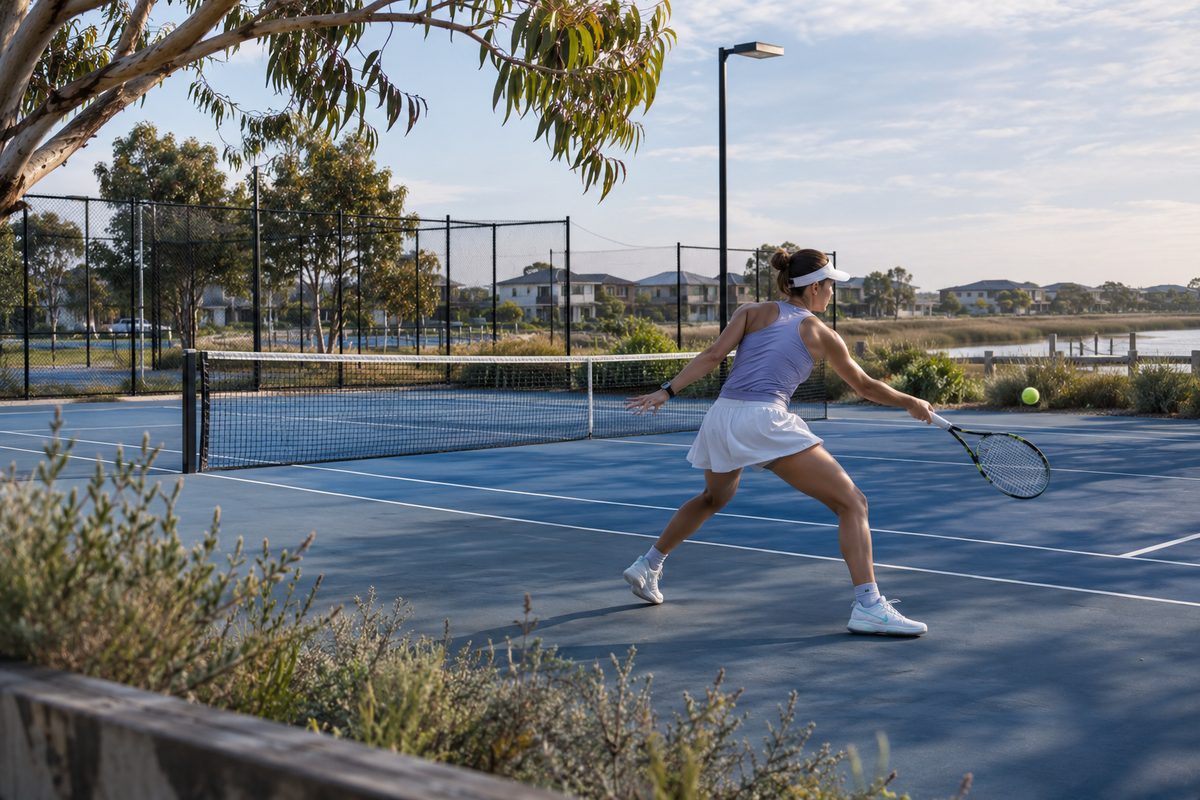
Saltwater Reserve Tennis Centre
Saltwater Reserve Tennis Centre is a local place to play tennis within the wider Saltwater Reserve precinct in Point Cook. It suits social hits, regular practice and organised tennis, but players should confirm current access rules before leaving home. Court availability can change when clubs, coaching sessions, competitions or maintenance need the space.
This guide focuses on using the tennis facilities well. It covers how to plan a session, choose a suitable time, bring the right gear and share the courts fairly. For a broader introduction to the suburb and nearby places, see the Point Cook Tideline local guide.
What should you confirm before planning a hit?
First, check whether the courts are open for casual use and whether a booking is required. Do not assume that an empty court is free. It may be reserved for a lesson, club activity or scheduled match that has not started yet.
Current conditions matter more than old social posts or directory entries. Facility rules, booking systems and operating times can change. The City of Wyndham is the relevant council for local public facility information, while a resident club or venue operator may manage some tennis activities. Use the current official contact or booking channel shown for the site.
Confirm these points before travelling:
- Whether casual players may use the courts
- Whether advance booking or payment is needed
- The length of each booking period
- How court access works after a booking
- Whether coaching or competition will limit availability
- Whether evening use is available
- Whether wet weather has closed the playing surface
This quick check prevents the most common failed visit: arriving with racquets and finding that every court is committed to organised play.
Who is the centre best suited to?
The centre can serve beginners, social players and people building a regular practice routine. A Tennis court gives two people enough space for a simple rally, while four players can share the session through doubles. Families may also use short, controlled games to help children learn basic contact and movement.
Beginners do not need to play full sets. Ten minutes of gentle rallying from inside the baseline often gives them more useful practice than a formal match. A new player can start closer to the net, use a slower ball and move back only after making clean contact.
More experienced players can divide a session between serving, rally patterns and points. This makes limited court time more useful. A hypothetical 60-minute session might include a short warm-up, focused practice from the baseline, serve and return work, then several games under normal scoring.
Organised tennis may offer a clearer path for players who want coaching, fixtures or regular opponents. Casual use remains useful for people who want flexible Recreation without joining a full program. The right choice comes down to whether you value structure or control over your own schedule.
How can beginners make their first session easier?
Use a ball that matches the player. Standard yellow balls travel quickly and bounce high. Low-compression balls move more slowly, giving children and new adults extra time to prepare. They can make the first session feel like tennis instead of a chase around the fence.
Keep the first goal simple. Try to send five gentle shots over the net with a partner. Once that feels steady, aim cross-court or add movement. Scoring can wait. Early success comes from control, spacing and repeatable contact.
A beginner session works best when each player knows the basic safety rules. Wait until nearby players finish their point before retrieving a loose ball. Call out if a ball rolls onto another court. Never run behind someone who is serving or swinging.
For children, an adult should set clear physical limits. Young players can lose track of other court users while chasing a ball. A simple rule such as stopping at the fence or waiting at the net post helps keep the session calm.
What equipment should you take?
Bring a sound racquet, enough balls and shoes with good grip. Running shoes may work for light social play if they support side-to-side movement, but worn soles can slide on a dusty or damp surface. Check the tread before leaving home.
Each player should carry water. Point Cook can feel exposed when the wind rises or the sun is strong, and a court session creates heat quickly. Sunscreen, a hat and light clothing are sensible for daytime play. A small towel helps with sweat and can dry a damp racquet handle.
Pack spare balls because balls can lose pressure, split or travel beyond the immediate playing area. Marking them with initials makes mixed groups easier to manage. Players who use an overgrip may also want a spare, since a slick handle reduces control.
A phone is useful for booking details and weather checks, but keep it away from the playing area. Loose bags, bottles and cases should sit where players cannot trip over them while moving for a wide shot.
How should you structure a useful practice session?
Start with movement before hard hitting. Walk or jog lightly, move side to side, then make slow practice swings. Begin rallying at a short distance. Increase pace only when both players feel ready.
Choose one main skill for the session. Trying to repair every part of a game at once creates rushed practice. A player working on consistency could count how many cross-court balls land beyond the service line. A player working on serving could aim for a large target area before trying for speed.
Use drills that match real points
A useful drill has a clear target and a way to measure progress. Rallying without a goal can still be fun, but it often hides the same mistake. Set a target such as ten controlled shots, five returns in play or three serves into each service box.
Finish with points that use the skill you practised. If the focus was the return of serve, start each point with a serve. If the focus was control, award a bonus when the rally reaches a set number of shots. This links the drill to the choices players make in a match.
Leave time to cool down
Stop hard play before the booking ends. Walk, collect every ball and clear personal items. Gentle movement after the final point helps the body settle. It also allows the next group to enter on time.
When is a good time to play?
The best time is a confirmed available period that suits the weather and the players. Early sessions can avoid the strongest heat. Later sessions may be cooler, but evening access should never be assumed. Check whether lighting is available, whether it must be activated and whether use ends at a set time.
Wind can shape a session as much as temperature. Point Cook often experiences conditions that make high balls drift and serves harder to control. That does not make practice useless. Players can shorten their swings, aim farther inside the lines and use lower targets over the net.
On hot days, reduce the length of hard rallies and take regular water breaks. Children and older players may need shorter blocks of play. If anyone feels dizzy, confused, sick or unusually weak, stop the session and move to a cooler place.
Rain creates a different risk. A surface can stay slippery after the sky clears. Test the area carefully without starting a rally. If shoes slide, water remains on the court or the facility has been closed, do not play.
How do bookings and shared access affect casual players?
A booking gives a group the right to use a court for a stated period under the venue rules. It does not give players control over nearby courts, shared paths or the whole reserve. Keep noise, loose balls and equipment within your area as far as practical.
Arrive early enough to find the correct entrance and prepare, but do not enter while the previous group is still playing. When your time ends, finish the point and clear the court. Starting one more game can delay every booking that follows.
If another group is on the court at your confirmed start time, speak calmly and show the booking details. Confusion can come from a wrong court number, a time error or an old access arrangement. Use the listed operator contact if the issue cannot be resolved.
Casual players should also expect periods when organised tennis has priority. Coaching and competition need reliable blocks of time. Checking the schedule before departure is easier than trying to find an unused space during a busy program.
What makes court behaviour fair and safe?
Good court behaviour protects players and keeps the centre useful for the wider community. Return stray balls safely. Avoid walking behind a court during a point. Keep gates closed when play is underway, unless the venue directs otherwise.
Players should control language and noise, especially when junior groups or nearby residents may hear them. Music should remain low and should not interfere with coaching or match calls. Dogs should never enter the playing space unless current facility rules expressly allow it.
Inspect the immediate area before serving. Look for loose balls, wet patches, damaged fencing or objects near the baseline. Report damage through the current facility or council channel rather than trying to repair fixed equipment yourself.
Use the centre for its intended purpose. Bikes, scooters and hard-wheeled equipment can damage a playing surface or place users at risk. Food and coloured drinks may also leave marks or create slippery patches, so keep them outside the court where required.
How can families plan a smoother tennis visit?
Set expectations before arrival. Decide how long the session will last, who will play and where anyone waiting should remain. A child who knows when their turn starts is less likely to wander onto the court.
Choose games that keep people involved. One adult can feed gentle balls while another child collects only after the basket is empty. Players can take turns trying to land a ball inside a large target zone. This reduces long waits and limits balls rolling across active play.
Bring basic comfort items, but keep the load small. Water, sun protection, simple first aid supplies and a spare layer usually cover a local session. Check current information about toilets, seating and nearby amenities instead of relying on an older map.
If a family member needs step-free access or another specific feature, confirm the route from the arrival point to the court. A facility can appear close on a map while gates, kerbs or surface changes make the trip harder in practice.
How does the tennis centre fit into a local exercise routine?
Tennis combines movement with a clear task. Players accelerate, stop, change direction and track the ball. The game can feel less repetitive than a fixed exercise session because each shot creates a new problem.
Consistency matters more than an occasional long match. A weekly booking can make activity easier to maintain because the time and place are set. Social players can also share the effort of organising balls, confirming access and finding substitutes.
The centre forms part of the local Recreation options available around Saltwater Reserve. That setting can help households combine different interests, but tennis players should keep their plan focused on confirmed court access. Wider reserve activity does not guarantee that a court will be free.
People returning to exercise should build volume slowly. Start with controlled rallies and shorter sessions. Stop if pain changes movement or grows as play continues. A warm-up helps, but it does not make an injury safe to ignore.
What details are most often missed?
Players often check the weather but forget the wind. They bring one new tube of balls but no water. They see a public sports precinct and assume every space works on a walk-up basis. These small errors cause more trouble than a lack of tennis skill.
Another missed detail is the difference between being present and having access. An open gate does not prove that casual use is permitted. An empty court does not cancel a booking. Current venue instructions remain the safest guide.
Players also overlook the final minutes of a session. Ball collection, packing and leaving the court all take time. Plan to stop active play early enough to finish within the booked period.
Before your next visit, confirm the current booking and access rules, check the weather, then pack water, suitable shoes, racquets and enough balls for the session.