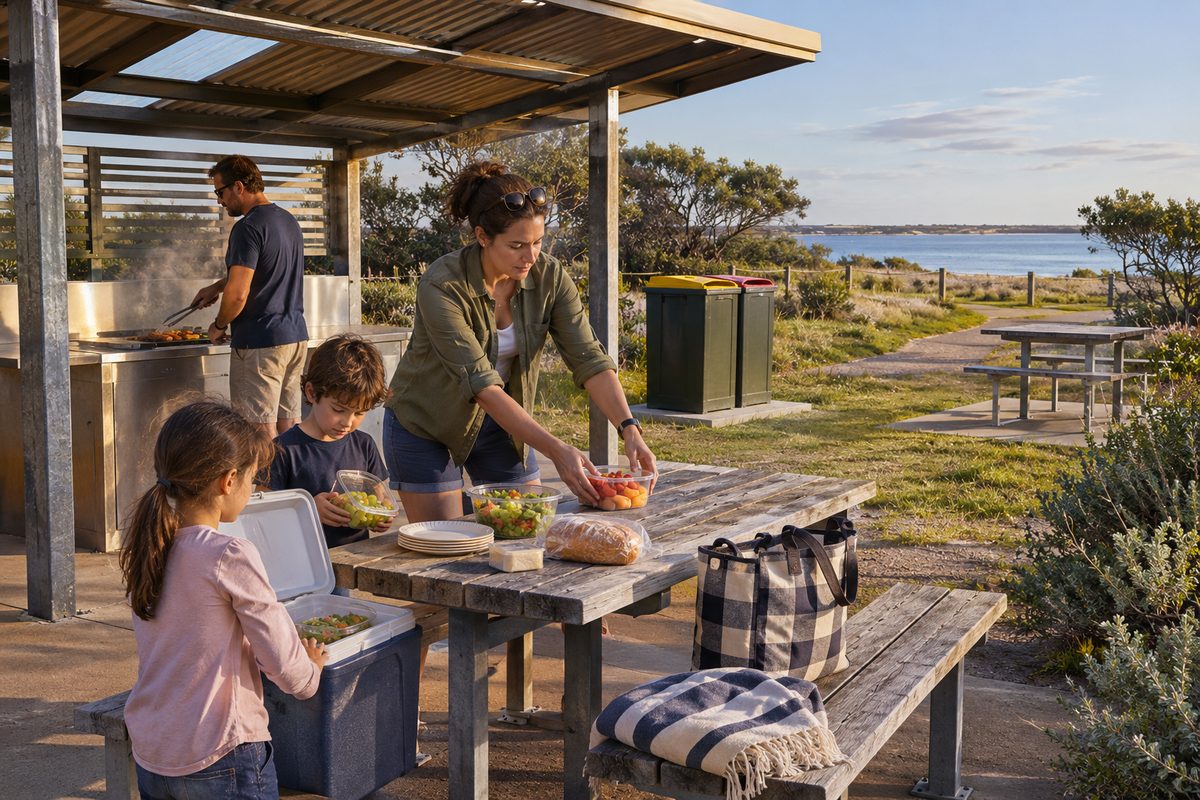
Point Cook Coastal Park Picnic Facilities
Point Cook Coastal Park has picnic tables, barbecue facilities, toilets and nearby parking, making it suitable for a simple coastal picnic. The setting beside Port Phillip adds open views, coastal Walking and Wildlife observation, but visitors should plan for limited shelter and changing weather. Facility access can also change during maintenance, fire danger or park works, so check the latest Parks Victoria conditions before leaving home.
This is a coastal reserve rather than a built-up recreation complex. Its appeal comes from the mix of practical picnic facilities and a protected natural setting. Pack what you need, keep the meal simple and expect a quieter day outdoors.
What facilities can you expect near the picnic area?
The main day-use area provides the basic facilities needed for a picnic. A visitor can generally expect a Picnic table, public toilets, barbecue facilities and space to sit on the grass. These features make the park useful for a family lunch, a quiet meal after a walk or a short group gathering.
Facilities in coastal parks can close without much notice when repairs or safety work are required. A barbecue may be unavailable, a toilet block may be under maintenance or part of the access road may close after severe weather. Treat the facilities as helpful additions rather than the whole plan.
Bring a picnic rug even if you hope to use a table. Tables can fill during fine weekends and public holidays. A rug gives you another option and lets you choose a spot with better shade or wind cover. Portable chairs can help older visitors and people who find low seating difficult.
Pack drinking water, sunscreen, hats and a rubbish bag. Do not assume that food, ice or other supplies will be available inside the park. Buy what you need before arriving. The Point Cook Tideline can help visitors find more local information before planning a day near the coast.
Are the barbecues suitable for a full picnic lunch?
The barbecue facilities can support an easy lunch, but a cold meal is the safer backup. Public barbecues may be busy or temporarily out of service. Fire restrictions can also affect what visitors may use during hot weather.
Choose food that is quick to cook and easy to carry. Keep raw meat in a cold esky, use separate utensils and return chilled food to the esky as soon as possible. Coastal wind can blow napkins, packaging and light utensils across the grass, so use containers with firm lids.
Never bring or use a portable solid-fuel barbecue unless current park rules clearly permit it. Total Fire Ban rules must be followed. Gas appliances can also face restrictions under severe conditions. Check official fire information on the day rather than relying on what was allowed during an earlier visit.
A practical backup meal could include filled rolls, fruit and food stored in sealed containers. This avoids turning a closed barbecue into a cancelled picnic. It also shortens setup and leaves more time for the coast.
How close can you park to the picnic facilities?
Visitors normally reach the day-use area by Car and use the designated parking area. The distance between parking and the facilities is manageable for many visitors, but anyone with limited mobility should confirm current access details before travelling.
Do not drive onto grass, tracks or other areas outside marked vehicle access. Coastal vegetation can suffer lasting damage from one vehicle, even when the ground looks firm. Keep access lanes clear for emergency and park vehicles.
Parking demand rises on warm weekends and public holidays. Arriving earlier improves the chance of finding a legal space and a free table. If the parking area is full, do not stop along a narrow road or block a gate. Choose another time rather than creating a safety risk.
Before unloading, look at the route from the vehicle to your chosen spot. A large esky, folding chairs and bags can make a short walk awkward. One wheeled cooler or trolley may be easier than several loose loads, provided it stays on durable paths and does not damage vegetation.
How much shelter is available?
Natural shade and built shelter can be limited, so prepare for direct sun and strong wind. Conditions beside Port Phillip often feel cooler than inland Point Cook, yet exposed skin can still burn quickly. Wind can also rise during the afternoon.
Use fitted hats, sunscreen and clothing that covers the shoulders. A small legal shade shelter may help if park rules and ground conditions allow it. Secure every item and never tie equipment to fragile plants or block a path.
Check the forecast for Point Cook rather than central Melbourne. Coastal conditions can differ across a short distance. If strong wind, extreme heat or thunderstorms are forecast, move the picnic to another day. A picnic table does not provide safe protection from lightning or damaging wind.
Cool weather needs planning too. An exposed table can feel cold even when the air temperature looks mild. Windproof layers and a warm drink can make a short picnic far more comfortable.
What can you do before or after eating?
Walking is the easiest activity to pair with a picnic. The park offers a change from suburban streets, with coastal views and access to natural areas. Stay on formed routes and obey signs, since some ground may be sensitive, wet or closed for conservation work.
Birdwatching is another good fit. The coast, saltmarsh and nearby wetland habitat support resident and visiting birds. Bring binoculars rather than trying to move closer. Wildlife observation works best when people remain quiet and give animals room to feed or rest.
The park supports low-impact Recreation such as picnicking, walking and nature viewing. It is less suited to activities that need large hard surfaces, loud music or extensive equipment. Keep games away from roads, barbecue areas and coastal vegetation.
Families can turn a short walk into a simple nature activity by looking for different bird shapes, tracks or plant forms. Children should observe without collecting shells, plants, nests or animals. This keeps Wildlife and habitat in place for the next visitor.
How does the marine sanctuary affect your picnic visit?
The adjoining Point Cooke Marine Sanctuary protects coastal waters and intertidal habitat. It is a Marine protected area, so visitors must follow rules designed to prevent the removal or harm of marine life.
Do not collect shells containing animals, crabs, plants or other marine organisms. Fishing and taking marine life are prohibited within the sanctuary. Check boundary information and official regulations before any shore-based activity, since rules can change across nearby stretches of coast.
A low tide may expose more of the shore, but exposed habitat is still alive and easily damaged. Watch from stable ground where possible. Do not prise animals from rocks, turn over objects or place hands into gaps where creatures may be hidden.
The sanctuary also changes how rubbish should be managed. A light wrapper dropped near the picnic area can reach the water through wind or drainage. Seal waste as soon as it is created and take it with you if bins are full. Food scraps also count as rubbish. They can attract animals and change natural feeding behaviour.
Is the area suitable for children and group picnics?
The park can suit children when adults plan for an open coastal setting. Close supervision is needed near the water, roads, barbecue surfaces and natural hazards. The coast does not become safe because the picnic area feels calm.
Choose a table or rug position away from vehicle movement. Set a clear boundary before children begin playing. Explain that they must stay where an adult can see them and must not enter the water without direct supervision.
For a group, keep the setup small enough to share the public area. A table cannot be reserved by leaving items unattended. Avoid taking over nearby tables that other visitors could use. Keep music low and leave paths open.
Large organised events may need permission even when ordinary family picnics do not. Commercial activity, structures, amplified sound and bigger gatherings can have separate rules. Contact the park manager before advertising or arranging such an event.
Dogs and other pets may face restrictions because of protected habitat and Wildlife. Read signs at the entrance and follow the current rules for the exact area being visited. A rule that applies in a nearby reserve may not apply inside the coastal park or sanctuary.
What should visitors with limited mobility check?
Accessibility depends on the open facilities, parking position and condition of the paths on the day. Before travelling, confirm whether an accessible toilet and suitable parking space are available. Ask about the surface and distance between the parking area, picnic facilities and coastal viewpoints if these details affect the visit.
Firm paths can still hold sand, water or loose material after rough weather. A route that works for one wheelchair or mobility aid may not suit another. Have a backup plan that does not rely on reaching the shoreline.
A companion can inspect the route before unloading equipment. Place chairs where the ground is stable and leave room for mobility aids. Avoid blocking the ends of tables or narrow paths with eskies and bags.
When is the best time for a comfortable picnic?
A mild, dry morning usually offers the easiest conditions. Morning visits often bring lighter winds, less demand for parking and better comfort during a walk. Birdwatching may also be more rewarding when the reserve is quiet.
Late afternoon can offer softer light but may bring stronger coastal wind and a faster drop in temperature. Allow enough time to pack before dark. The park has natural hazards that become harder to see in low light.
Warm weekends attract more visitors. If a quiet picnic matters, choose a weekday or arrive earlier. During winter, focus on a short meal and walk rather than a long day on exposed grass.
Tide times matter if you want to view the shore, but they do not change the sanctuary rules. Check the weather, tide and park status together. One good forecast number cannot rule out heat, wind, storms or closures.
What should go on your picnic checklist?
- Food in sealed containers and enough drinking water for the full visit
- An esky with ice bricks for food that must stay cold
- A picnic rug or portable chairs in case every table is occupied
- Sun protection, windproof clothing and any required medicine
- Bin bags for food scraps, packaging and used wipes
- Binoculars for Birdwatching and Wildlife observation
- A charged phone, current weather details and downloaded park information
Leave balloons, loose decorations and glass items at home. They create avoidable risks near grass, wildlife habitat and the shore. Use reusable containers where possible and count your belongings before leaving.
Clean the table after eating, but do not pour dirty water or chemicals onto the ground. Take cooking grease and food waste away in sealed containers. Check beneath the table for bottle tops, ties and small pieces of plastic.
What is the simplest way to plan the visit?
Build the outing around the natural setting, with the facilities serving as support. Confirm official park conditions, check the fire danger and weather, then pack enough food and water to cope if a barbecue or table is unavailable. Keep the meal modest so the group can move easily and leave the site clean.
Before setting out, check the current park status and weather, then pack a rug, water and a cold meal as your backup plan.