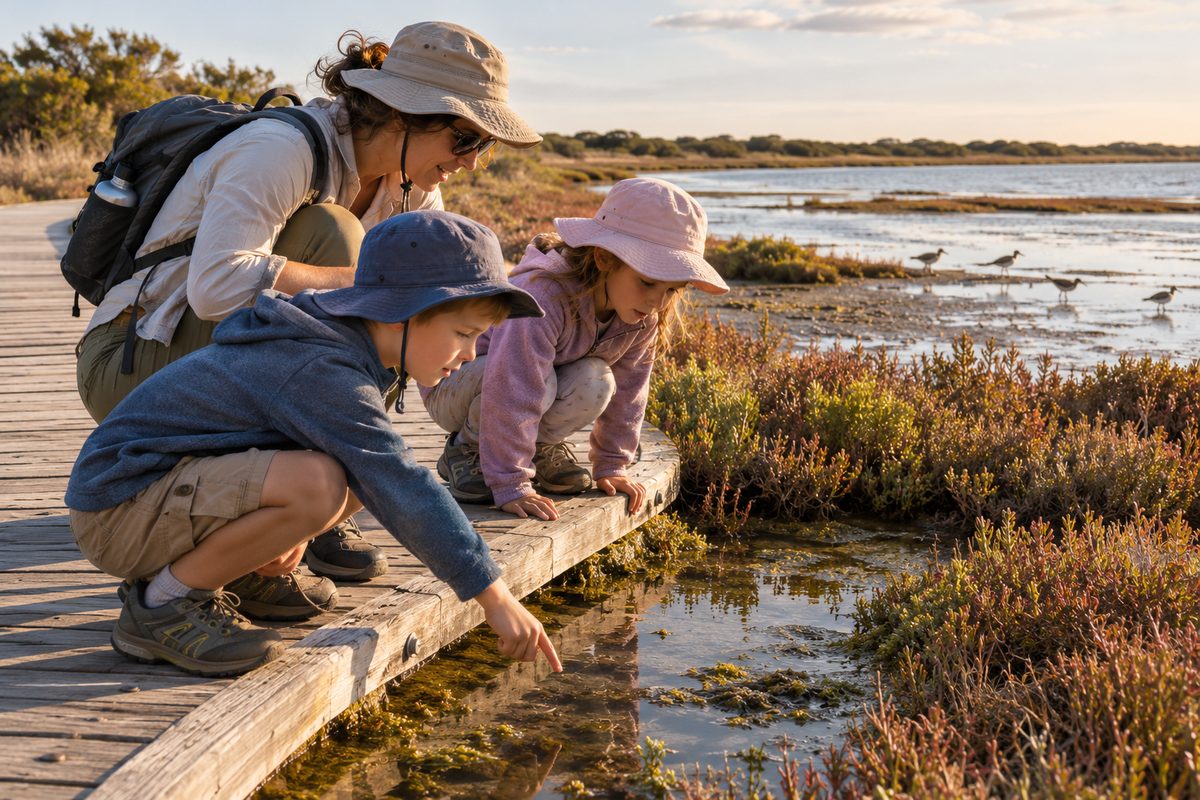
Point Cook Coastal Walks with Children
The best Point Cook coastal walks with children are short, flexible outings that combine the shore, wetlands and regular rest stops. Point Cook Coastal Park gives families room to explore without turning the day into a long hike. Children can look for shells, watch birds and see Port Phillip from several settings. The key is to choose a small area, set a clear turnaround time and leave enough energy for the walk back.
The coast can feel calm at the car park and much harder once the wind rises. Shade is limited in open areas, while young children may stop often to inspect mud, feathers or tracks. A successful family walk therefore depends less on distance and more on timing, clothing and a simple plan.
Which part of the coast works best for your family?
Start with the experience your children will enjoy most. The Point Cook Coastal Park area offers access to coastal scenery, open parkland, historic surroundings and wetland habitat. A family seeking an easy first outing can stay near the main visitor area and Beach. Older children who can manage a longer walk may enjoy moving between different habitats, provided the route and conditions suit them.
Do not measure the outing by how many kilometres you cover. A child who spends ten minutes watching crabs or studying bird footprints is still exploring the coast. Set one simple goal, such as reaching a viewpoint, finding three types of bird or having lunch beside the parkland. Turn back before tiredness changes the mood.
Cheetham Wetlands adds a different experience from the open shore. Its saltmarsh and wetland environment supports many birds, including migratory species. However, families should treat it as a wildlife area rather than a play space. Stay on designated tracks, keep voices low and follow all signs or access restrictions.
How far should children walk?
Choose a distance based on the youngest walker, not the strongest adult. A preschool child may cover a short route slowly because every object becomes a discovery. Primary school children can often walk farther, but wind and heat can drain their energy faster than expected.
A useful method is to walk out for a fixed time and return along the same route. For a young family, that might mean 15 to 25 minutes before turning around. This creates a predictable limit and reduces the risk of being far from the car when a child becomes cold, hungry or tired.
Add time for stops. A one-kilometre family walk may take much longer than an adult expects. Allow children to observe the coast while keeping the group moving often enough to remain warm. If the first half feels difficult, turn around at once. The return trip still requires energy.
What should you check before leaving home?
Check the forecast, wind speed and current park information on the day of the walk. Parks Victoria publishes visitor information and park alerts that may affect access, facilities or track conditions. Conditions can change after rain, maintenance work or periods of elevated fire danger.
Wind matters as much as temperature beside Port Phillip. A cool breeze can make children uncomfortable even when the day begins sunny. Strong onshore wind may also make the return leg harder. Pack a light outer layer for each child and avoid relying on the temperature shown for inland suburbs.
Confirm sunset time if visiting late in the day. Open coastal ground can become dark quickly once the sun drops, and children move more slowly when tired. Plan to finish with plenty of daylight left.
Families should also check whether toilets, gates and parking areas meet their needs. Do not assume Drinking water will be available at the point where you stop. Carry enough for every person, even on a cool day.
What belongs in a small family walking bag?
Pack for comfort without carrying a large load. Each child needs a hat, sunscreen, suitable shoes and a weather layer. Bring Drinking water, a basic first aid kit and food that is easy to eat without leaving wrappers behind. A rubbish bag helps the family remove every scrap.
- Water bottles filled before departure
- Sun protection and a light windproof layer
- Closed shoes with grip for firm tracks and uneven ground
- Simple snacks that do not melt or spill
- Any medicine the child may need
- Binoculars or a printed bird sheet for Birdwatching
A change of socks can rescue the day if a child steps into shallow water or mud. Spare clothes are useful for toddlers, but they can remain in the car during a short loop. Keep phones charged and save key park information before travelling in case reception is weak.
How can children explore without disturbing wildlife?
Turn wildlife care into part of the activity. Ask children to watch from the track, use quiet voices and leave feathers, nests and plants where they are. A Water bird may move away from feeding or resting areas when people get too close. Giving it space lets children observe natural behaviour for longer.
Birdwatching works well with children when it has a clear task. Ask them to compare beak shapes, count birds on the water or notice which species feed in shallow areas. Avoid asking them to chase a closer view. Binoculars provide detail without forcing wildlife to move.
Dogs must be managed according to the rules shown for each part of the park. Wildlife reserves and coastal areas can have different restrictions, so read signs at the entry rather than assuming one rule applies everywhere. Never allow a pet to approach birds or enter protected habitat.
Children should stay away from snakes and never place hands into long grass, holes or under driftwood. If a snake appears, stop, give it room and move away calmly. Adults should also check for ticks after time near vegetation.
How do you make the walk interesting without a playground?
Give children a small mission linked to the place. They could find evidence of changing water levels, compare smooth and rough shells, or listen for two bird calls. The goal is observation, not collection. Natural material should remain in the park.
A simple coast card can include boxes for a feather, animal track, salt-tolerant plant and bird feeding in water. Children mark what they see rather than taking it home. This slows the walk in a useful way and helps adults explain how the Beach, saltmarsh and wetlands support different life.
Older children may enjoy a map task. Show them the parking area, shoreline and planned turnaround point before setting out. Ask them to notice landmarks on the return journey. This teaches basic route awareness while keeping the adult responsible for navigation.
For more local ideas before planning the outing, families can use the Point Cook Tideline local guide as a starting point, then confirm access and conditions through official park information.
Where should you stop for food and rest?
Plan a Picnic for after the walk or at a clear halfway point. Children often walk more happily when they know where the next break will happen. Use established visitor areas, keep food under control and remove all waste.
Do not feed birds. Human food can harm wildlife and encourages birds to approach people. Keep lunch packed until the family reaches the chosen rest area, especially near water where gulls and other birds may gather.
Point Cook Homestead adds historic interest to the coastal setting, but families should confirm current access arrangements before making it the centre of a visit. Buildings, commercial operations and surrounding grounds may have different opening conditions from the public park. Treat the homestead as a possible addition to the day rather than an assumed facility or through-route.
Choose a rest place protected from strong wind where possible. Sit on a mat rather than spreading food through the grass. Before leaving, ask children to complete a quick rubbish check around the Picnic spot.
What hazards need the most attention?
Water, heat and separation are the main risks to manage. Keep young children within arm's reach near the shore. Coastal water can be cold, edges may be slippery and the ground may drop or soften without warning. The Beach is better treated as a place to observe and paddle only when conditions and supervision allow, not as a guaranteed swimming site.
Open sections offer little shade. Avoid the hottest part of very warm days and reapply sunscreen as directed on the product. Each person should drink regularly rather than waiting until they feel thirsty.
Set one family rule before starting: nobody passes the lead adult or falls behind the last adult. Dress young children in bright clothing so they remain easy to see. If the area is busy, give children a clear meeting point near the car or visitor area.
Wet or muddy ground can turn a simple route into a tiring one. Do not push a pram onto a track unless official information confirms that the surface and access suit it. A carrier may be useful for a baby, but the adult must still account for heat, balance and the extra load.
When is it better to change the plan?
Change the plan when wind, heat, rain or a tired child makes the chosen route harder than expected. A shorter visit still gives children contact with the coast. Walking for twenty calm minutes is better than forcing a long route through poor conditions.
Use an alternative such as a brief shoreline look, a snack in the parkland or Birdwatching from a safe fixed point. If official signs close an area, do not cross the barrier to complete the planned walk. Closures protect visitors, wildlife or maintenance crews.
Families should also leave if children become cold, unusually quiet, unsteady or hard to manage near water. These signs matter more than reaching a landmark. Return while the group can still move safely.
How can you build up to a longer coastal outing?
Begin with a short visit close to facilities. Notice how each child handles the wind, uneven surfaces and slower pace. On the next outing, add a little distance or one extra observation stop. Do not increase both at once.
Keep a simple record of what worked. Note the useful parking area, the time children stayed engaged and which gear remained unused. This gives the family a practical plan for later visits without turning the walk into a strict schedule.
Older children can take more responsibility as their skills grow. One child can carry the wildlife sheet while another checks that wrappers return to the bag. Adults should retain control of route choices, weather checks and water safety.
Point Cook Coastal Park and Cheetham Wetlands reward slow attention. The strongest family outing may cover little ground while revealing how wind, tides, plants and birds shape the edge of Port Phillip. That focus keeps the walk distinct from a playground trip or a race to a distant lookout.
Choose one short route, check the Parks Victoria alert and weather pages, pack water, then set a turnaround time before your family starts walking.